
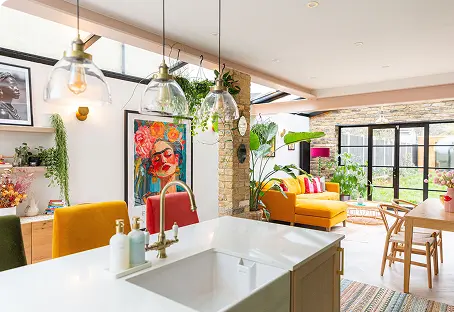
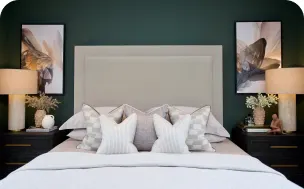
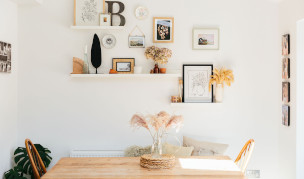
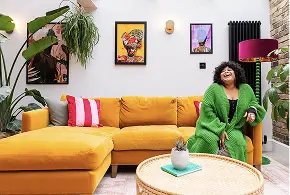











Small living room? Don’t panic! Compact spaces can feel intimate and warm, but when your coffee table feels like a hurdle, it’s time for a bit of design intervention.
The secret to mastering a small living room isn’t about wishing for more square footage – it’s all about creating visual space. By manipulating light, tricking the eye with scale, and keeping visual clutter at bay, you can easily turn a cramped lounge into a breezy, beautifully proportioned haven.
Here are our top designer tricks to make a small living room feel instantly bigger.

1. Scale Up Your Rug
It sounds completely backwards, doesn’t it? When space is tight, instinct tells us to buy a small rug to match.
However, placing a tiny rug in the centre of a small room acts like a big, bright frame around a small patch of floor, drawing the eye inward to highlight how limited your floor space actually is.
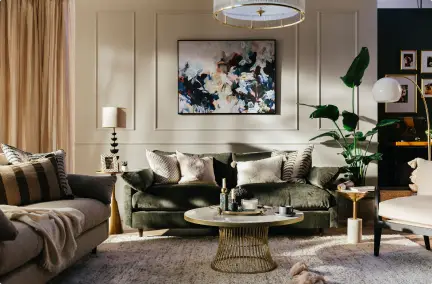
Instead, go big! Choose an oversized rug that extends under the front legs of your sofa and armchairs. Stretching the floor textile outward pulls the eye toward the edges of the room, tricks the brain into perceiving a much larger floor area, and effortlessly grounds your seating setup.
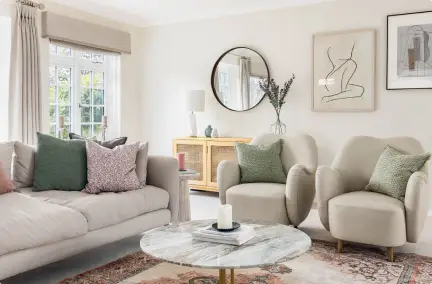
Laura’s Calm and Serene Living Room Design >

Pro Tip: Stick to light neutral tones or subtle, low-contrast patterns for your rug to keep the floor looking continuous and airy.
2. Embrace Leggy, Low-Profile Furniture
Blocky, solid furniture that sits flush against the carpet creates a visual wall, absorbing natural light and stopping air from circulating around the room.
To curate an open, weightless feel:
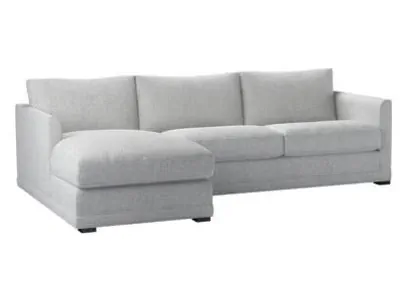
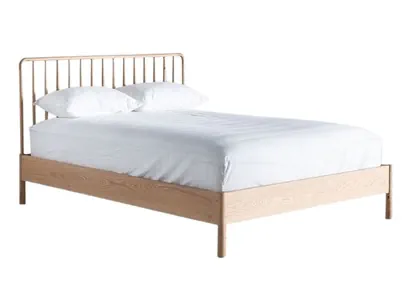
- Choose furniture with exposed legs (think tapered mid-century wooden feet or slender metal bases). Seeing the floor extend under your sofa and sideboards makes the room feel twice as open.
- Pick low-profile sofas and chairs with lower backs. Keeping the height of your seating down leaves a larger expanse of open wall above, making your ceilings look higher.
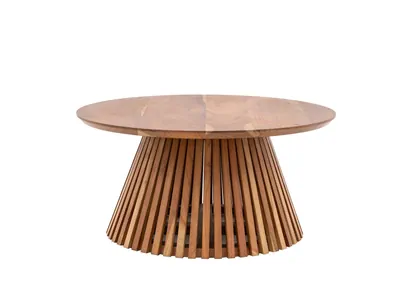
- Incorporate transparent or glass materials, like a glass-topped coffee table or clear acrylic nesting tables that visually vanish into thin air.

3. Work the Perimeter & Vertical Space
When square footage is at a premium, the only way to go is up! Floor-to-ceiling elements draw the eye vertically, giving the illusion of soaring height and extra room.
- Fitted Joinery: Install slim, floor-to-ceiling open shelving units rather than bulky freestanding bookcases.
- Hang Art High: Position artwork slightly above eye level or stack two framed prints vertically to guide the gaze upward toward the ceiling line.
- Floating Units: Swap chunky floor cabinets for wall-mounted, floating media consoles so the floor below stays completely clear.

4. Master the Reflective Magic of Mirrors
Mirrors are an absolute non-negotiable for compact living rooms. They reflect both natural and artificial light while doubling the visual depth of your walls.
Position a large, statement mirror opposite a window to catch incoming daylight and bounce it into darker, shadow-filled corners. If you don’t have wall space for a heavy hanging frame, a sleek, floor-leaning arched mirror instantly opens up the room while adding a touch of casual elegance.

5. Ditch Heavy Window Dressings
Framing a small window with heavy, dark velvet drapes can feel like wrapping a tiny room in a thick blanket, which is cosy for winter, perhaps, but claustrophobic year-round.
Swap thick, dark curtains for lightweight, breathable fabrics like pure linen or breezy sheers in off-white, soft stone, or warm cream.
Always mount your curtain track or pole right up at ceiling height and extend it well past the window frame on both sides. When you open your curtains, the fabric will rest entirely on the surrounding walls, exposing every square inch of glass to let maximum daylight flood in.

6. Stick to a Cohesive, Low-Contrast Colour Palette
High-contrast colour schemes—like dark charcoal walls paired with stark white trim—visually slice a small room into tiny, choppy sections.
To create a seamless, expansive feel, embrace a monochromatic or low-contrast colour palette:
- Paint your walls, baseboards, and door frames in the exact same shade (or subtle tonal variations of it).
- Choose upholstery fabrics that complement your wall colour rather than fighting against it.
- When boundaries blur and edges disappear, your eyes aren’t stopped by stark colour changes, making the walls feel like they recede into the distance.
Ready to Transform Your Compact Space?
Making a small living room feel spacious isn’t about making drastic structural changes—it’s about clever styling, smart furniture choices, and letting light do the hard work for you. With a few thoughtful tweaks, your small room will feel cosy, chic, and wonderfully roomy!
FAQ:
Light neutrals and low-contrast colour schemes can help a small living room feel more open and continuous. Using similar tones across walls, woodwork and larger furniture pieces reduces visual breaks and can make the boundaries of the room feel less obvious.
Yes. A larger rug that sits beneath at least the front legs of your sofa and chairs can make the seating area feel more connected and expansive. Very small rugs can visually divide the floor and make the room appear more cramped.
Choose furniture with a lighter visual footprint, such as sofas and chairs with exposed legs, lower backs and slimmer frames. Wall-mounted storage, nesting tables and transparent materials can also help preserve visible floor space.
Position a mirror where it can reflect natural light or an open view across the room. Opposite or adjacent to a window often works particularly well, as the reflected light and depth can make the space feel brighter and larger.
