
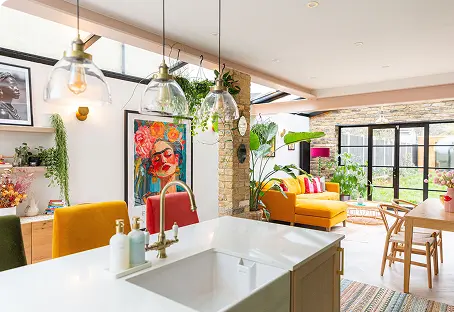
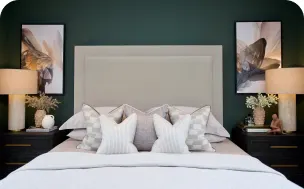
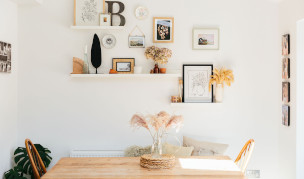
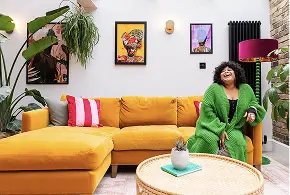


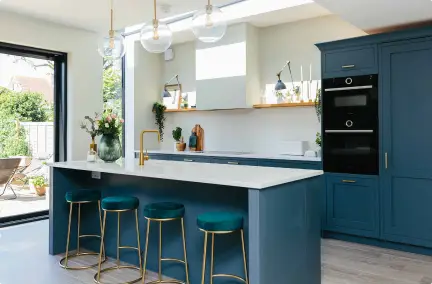
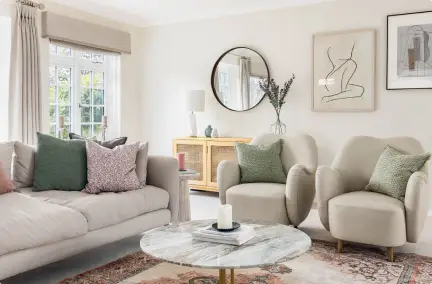
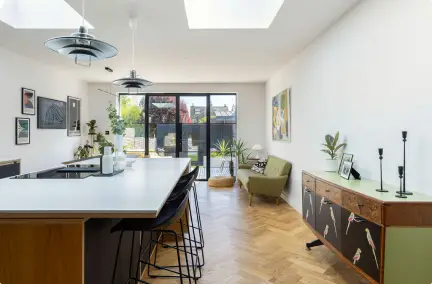
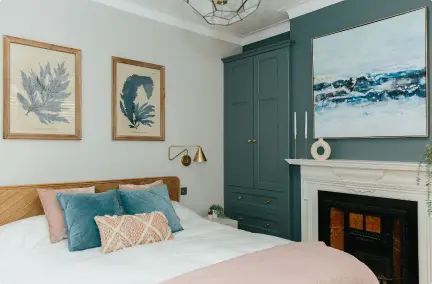









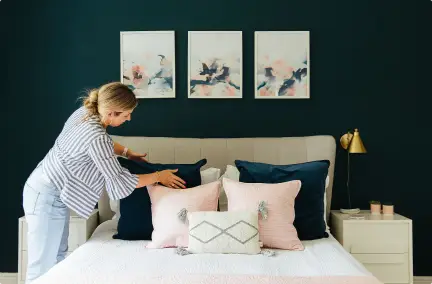
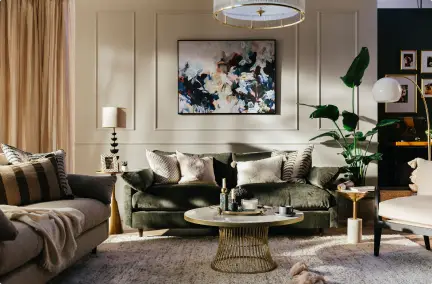

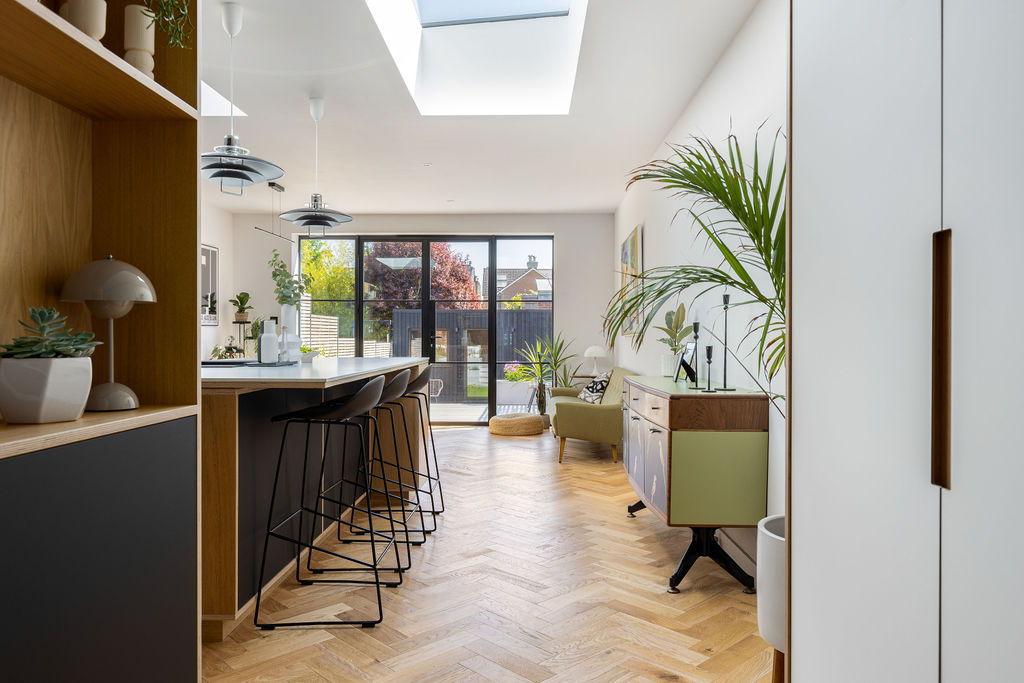
Think Mad Men vibes, warm wood tones, and retro sofas with those iconic tapered legs. Think Mid-Century Modern.
If you’ve ever fallen in love with a sleek teak sideboard or a sculptural lounge chair, you’re already under its spell. Born in the mid-20th century, this design powerhouse remains one of the most popular, timeless, and effortlessly cool aesthetics in home decor. At My Bespoke Room, we love how Mid-Century Modern (or MCM, as design lovers call it) seamlessly balances retro charm with easy, functional living.
Let’s dive into where this iconic style came from, its defining features, and how to bring a fresh, modern twist on Mid-Century style into your own home!

The Origins: Post-War Optimism Meets Innovation
Mid-Century Modern design spanned roughly from the mid-1940s to the late 1960s. Emerging in the wake of World War II, it was fueled by a sense of post-war optimism, new technology, and a desire for fresh beginnings.
Design pioneers like Charles and Ray Eames, Arne Jacobsen, and Hans Wegner revolutionised the industry by experimenting with new manufacturing techniques and materials like moulded plywood, fibreglass, resin, and metal. The goal? To create beautiful, high-quality, and functional furniture that was affordable and accessible for the everyday family home.
Key Elements of Mid-Century Modern Interior Design
Wondering how to spot authentic MCM style in the wild? Here are the core hallmarks that define this iconic look:
1. Organic Forms & Geometric Lines
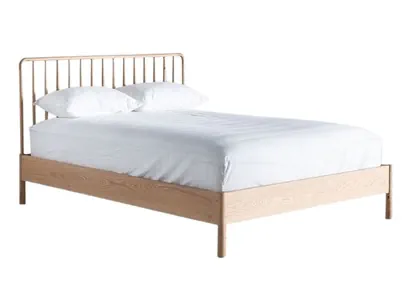
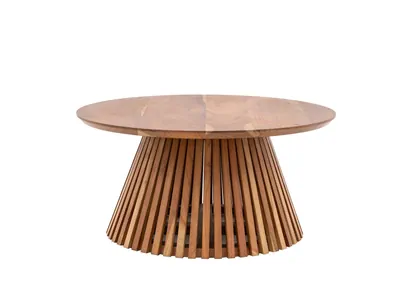
Mid-Century Modern design bridges the gap between clean structure and natural shapes. You’ll find smooth, organic curves (like kidney-shaped coffee tables and contoured chairs) mixed with sharp, geometric angles and gently tapered legs that give furniture a lightweight, floating feel.

2. Warm, Rich Woods
Wood is the absolute star of the show. Teak, walnut, rosewood, and oak are heavily featured in MCM spaces. Rather than heavy, dark, ornate stains, Mid-Century furniture celebrates the natural grain, warmth, and rich tones of the wood itself.

3. Bold Pops of Retro Colour
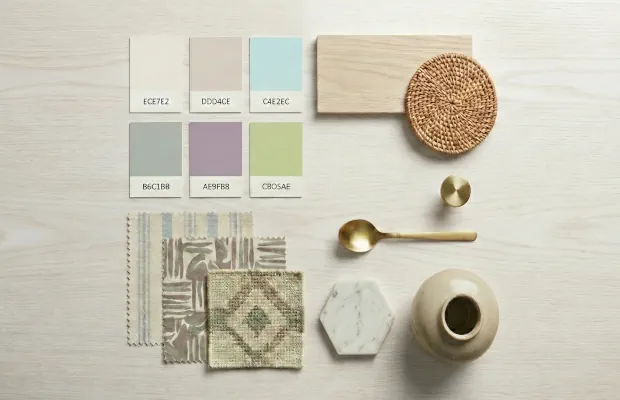
While the foundation of an MCM room often starts with warm neutrals, white walls, and wood tones, it isn’t afraid of a vibrant colour palette! Think playful retro shades like mustard yellow, burnt orange, olive green, teal, and dusty blue introduced through accent chairs, rug patterns, and artwork.

4. Mix of Natural and Synthetic Materials
One of the most groundbreaking features of Mid-Century design was its daring mix of materials. Sleek natural wood and leather were paired alongside modern industrial elements like moulded plastic, tubular steel, glass, and vinyl, creating an exciting contrast of textures.

5. Seamless Indoor-Outdoor Flow
MCM architecture and interior design prioritise connecting the home with the natural world outside. Think large floor-to-ceiling windows, sliding glass doors, indoor houseplants, and low-profile furniture layouts that keep sightlines clear to the garden.

How to Style Mid-Century Modern
The secret to bringing MCM into a modern, real-life home is to avoid making your living room look like a vintage set from the 1960s. It’s all about blending the best retro features with fresh, modern touches:
- Anchor with One Anchor Piece: Start small! Invest in one hero piece—like an authentic teak sideboard, a classic starburst clock, or an iconic Eames-style lounge chair—and let it take centre stage.
- Balance Wood Tones: If you have dark walnut furniture, soften the look with light wool rugs, soft linen drapery, and neutral painted walls so the room feels bright and airy.
- Layer Contemporary Fabrics: Give retro silhouettes a fresh update by choosing furniture upholstered in cosy modern fabrics like bouclé, velvet, or textured weaves.
FAQ:
Mid-Century Modern interiors are known for clean lines, organic shapes, tapered furniture legs, warm wood tones and a mix of natural and man-made materials. The style also places a strong emphasis on function, simplicity and creating a visual connection with the outdoors.
Warm neutrals and natural wood tones usually form the base, with stronger colours added through furniture, rugs and artwork. Mustard yellow, burnt orange, olive green, teal and dusty blue are all commonly associated with the style.
Yes. In fact, mixing a few Mid-Century Modern pieces with more contemporary furniture is often the easiest way to keep the look fresh. Focus on complementary shapes, wood tones and colours rather than trying to make every item come from the same era.
Start with one or two statement pieces, then balance them with lighter colours, contemporary fabrics and simpler accessories. Avoid filling the room entirely with vintage-style furniture, as a more selective approach will help the space feel inspired by the period rather than themed around it.
