













For us, curtains are more than a finishing touch. Rather than simply decorative, they can be a key architectural tool. They possess the unique ability to alter the perceived proportions of a room, soften harsh structural lines, absorb acoustic bounce, and anchor a design scheme.
If you are looking to elevate your living room from a collection of beautiful furniture to a cohesive, professionally styled space, your window dressing requires a thoughtful approach. Here is how to choose living room curtains like an interior designer.

1. Correcting Room Proportions
One of the most common mistakes in independent decorating is dressing only the glass. If you place your curtain fixture directly at the top of the window frame and end it exactly where the glass stops, you inadvertently shrink your room. We look at the entire wall interface to optimise both light and scale.
The “High and Wide” Rule
To create the illusion of loftier ceilings and a grander footprint, you must manipulate the placement of the curtain track or pole.
- Fixing High: Install your hardware as close to the ceiling or coving as possible—ideally 15 to 20cm above the window frame, or even mounted directly to the ceiling. This draws the eye upward, making low ceilings feel significantly taller.
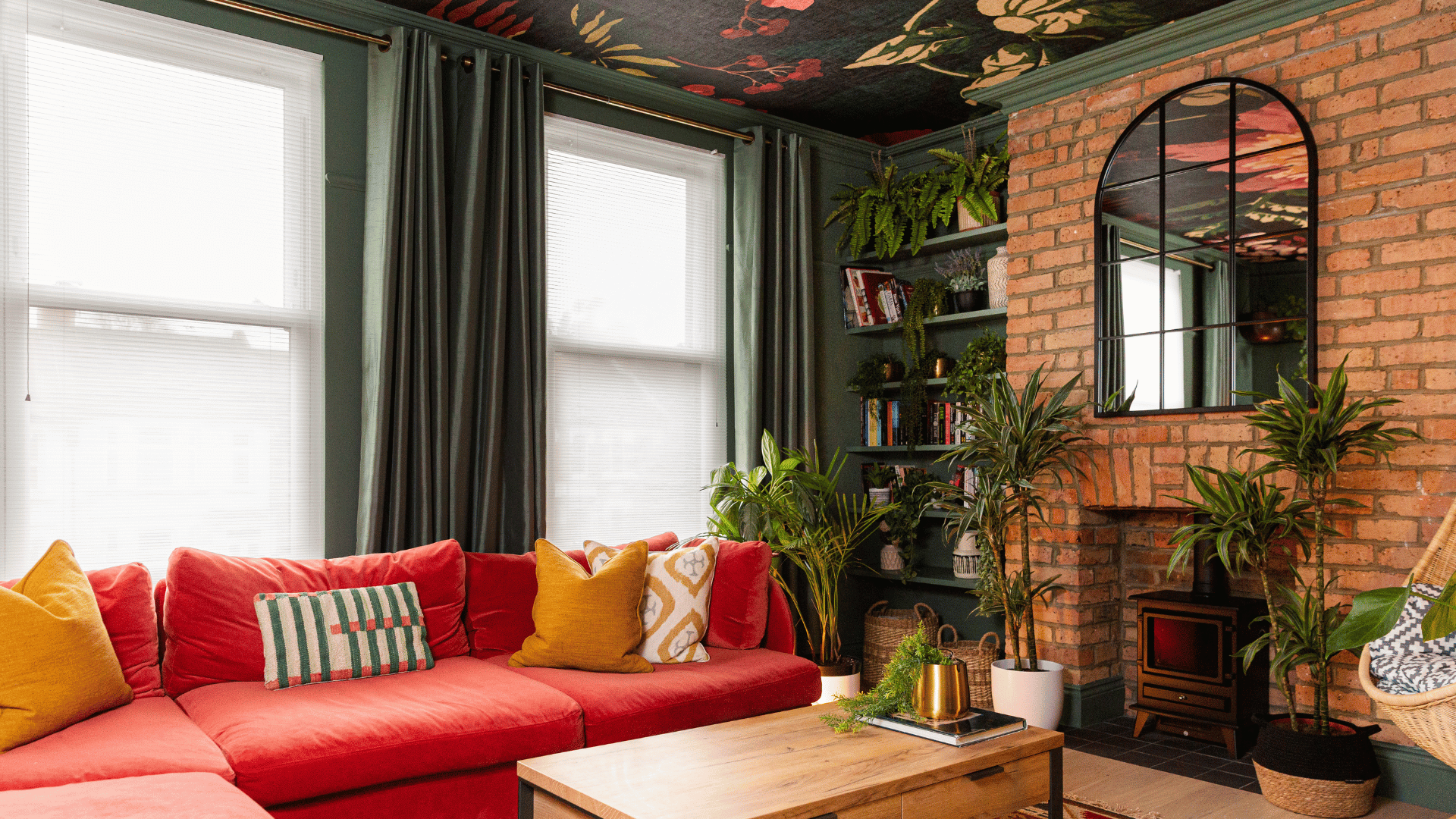
- Fixing Wide: Extend the hardware 20 to 30cm past the window frame on each side. This ensures that when the curtains are fully drawn open, the fabric “stacks back” against the wall rather than blocking the glass. This maximises the natural light entering your living room and makes the window itself appear much wider.
The Footprint
The way the fabric meets the flooring dictates the formality of your living room. Instead of standard lengths, consider these two finishes:
- The Float or Skim: The fabric sits precisely 1 to 2mm above the floor. It is crisp, tailored, highly modern, and ensures the hem stays clean. It requires absolute precision in measuring.
- The Break-In or Gentle Pool: The fabric is cut 2 to 5cm longer than the floor measurement, causing it to break elegantly over the flooring. This creates a relaxed and romantic aesthetic, ideal for uneven floors in period properties.

2. Advanced Headings
The heading, or the way the fabric is stitched at the top, determines how the curtains fold, how they stack when open, and the overall design language of the space. While traditional retail focuses on basic, unstructured headers, premium spaces rely on architectural neatness.
The Wave Heading
The wave heading is the undisputed favourite for contemporary living rooms. It utilises a specific track system with hidden gliders linked by a cord inside the rail. When the curtains are drawn, they are forced into soft and continuous “S” shapes. Because there is no gathering or pleating at the top, wave curtains stack back very tightly, making them the ultimate choice for bi-fold doors, large expanses of glass, or minimalist aesthetics.
Tailored Pinch Pleats
For timeless elegance, double or triple pinch pleats are the gold standard. These are permanent, sewn-in pleats at the top of the curtain that distribute fullness evenly across the track. A double pinch pleat feels clean and tailored, while a triple pinch pleat offers a more stately weight.

3. The Hardware Strategy
Beautiful fabric can be undermined by a poorly chosen rail. The hardware should match the architectural language of your room or be completely invisible.
Concealed Ceiling Tracks
If you are aiming for a seamless, ultra-modern aesthetic, consider a recessed ceiling track. These tracks are plastered directly into a ceiling slot during a renovation, allowing the curtain fabric to appear as if it is flowing straight out of the ceiling architecture itself. Alternatively, matching a surface-mounted track to the exact paint colour of your wall or ceiling allows it to visually disappear.
Hardware Coordination
If your design scheme calls for a visible pole, treat it as architectural jewellery. Coordinate the metal finish with the existing hard finishes in your living room. If your wall sconces, switches, and cabinet handles are antique brass or matte black, your curtain pole should mirror that choice to create a thread of visual continuity through the space.

4. The Interlining Secret
The difference between a curtain that looks flimsy and one that looks truly bespoke comes down to what is hidden inside. A premium living room curtain is a three-layer construction: the face fabric, the interlining, and the lining.
The Power of “Bump”
Interlining involves inserting a soft, heavy, blanket-like fabric (often called bump) between the main face fabric and the reverse lining.
- Drape Quality: Interlining gives thin or medium-weight fabrics, like silk or lightweight linen, a substantial, rounded fullness. It forces the folds to hang with a luxurious, columnar weight that cannot be achieved with standard lining alone.
- Acoustic Architecture: Living rooms often suffer from acoustic bounce due to hard floors, glass panes, and minimalist styling. Interlining acts as a sound dampener, absorbing echoes and making the room feel quieter and more intimate.

5. Integrating Texture and Scale with Your Existing Scheme
When selecting the visual elements of your curtains, they should balance against the existing weights and textures of your furniture.
Textural Counterbalance
Look at your largest upholstered pieces, such as your sofa and armchairs. If your sofa is upholstered in a heavily textured fabric like bouclé or a flat-weave, choose a smoother, tightly woven curtain fabric like a heavy brushed cotton or a flat linen to create a pleasing textural counter-play. Conversely, if your seating is sleek leather or smooth velvet, introducing a slubby, open-weave linen curtain brings much-needed organic texture into the space.
The Rule of Pattern Scale
If you want to introduce a pattern to your curtains, look closely at the size of your living room and the scale of other prints nearby.
- Large-Scale Architecture: A large, sweeping geometric or botanical print works beautifully on an expansive window because the pattern has room to repeat and breathe.
- The Pattern Mix: If you already have a patterned rug or accent cushions, vary the scale. If the rug features a small, intricate motif, your curtains should feature a larger, more graphic pattern (or vice versa) to prevent the visual elements from competing for attention.
By treating your curtains as a core structural element of your living room layout rather than an accessory, you can effortlessly balance light, correct awkward spatial quirks, and frame your home beautifully.
FAQ:
Full-length curtains usually create the most polished look. For a crisp, contemporary finish, let them skim just above the floor. For a softer and more relaxed appearance, the fabric can extend slightly further and gently break or pool at the bottom.
Your curtain pole or track should extend beyond the window frame so the curtains can stack back against the wall when open. This exposes more of the glass, maximises natural light and can make the window appear wider.
They can. Hanging curtains high and wide draws the eye upwards and exposes more of the window, which can make both the ceiling and window feel larger. Floor-length curtains also create uninterrupted vertical lines that help visually stretch the room.
Not always, but lining can improve how curtains hang while offering greater privacy and light control. Interlining adds another layer of weight and softness and can also help absorb sound in rooms with lots of hard surfaces.
