
















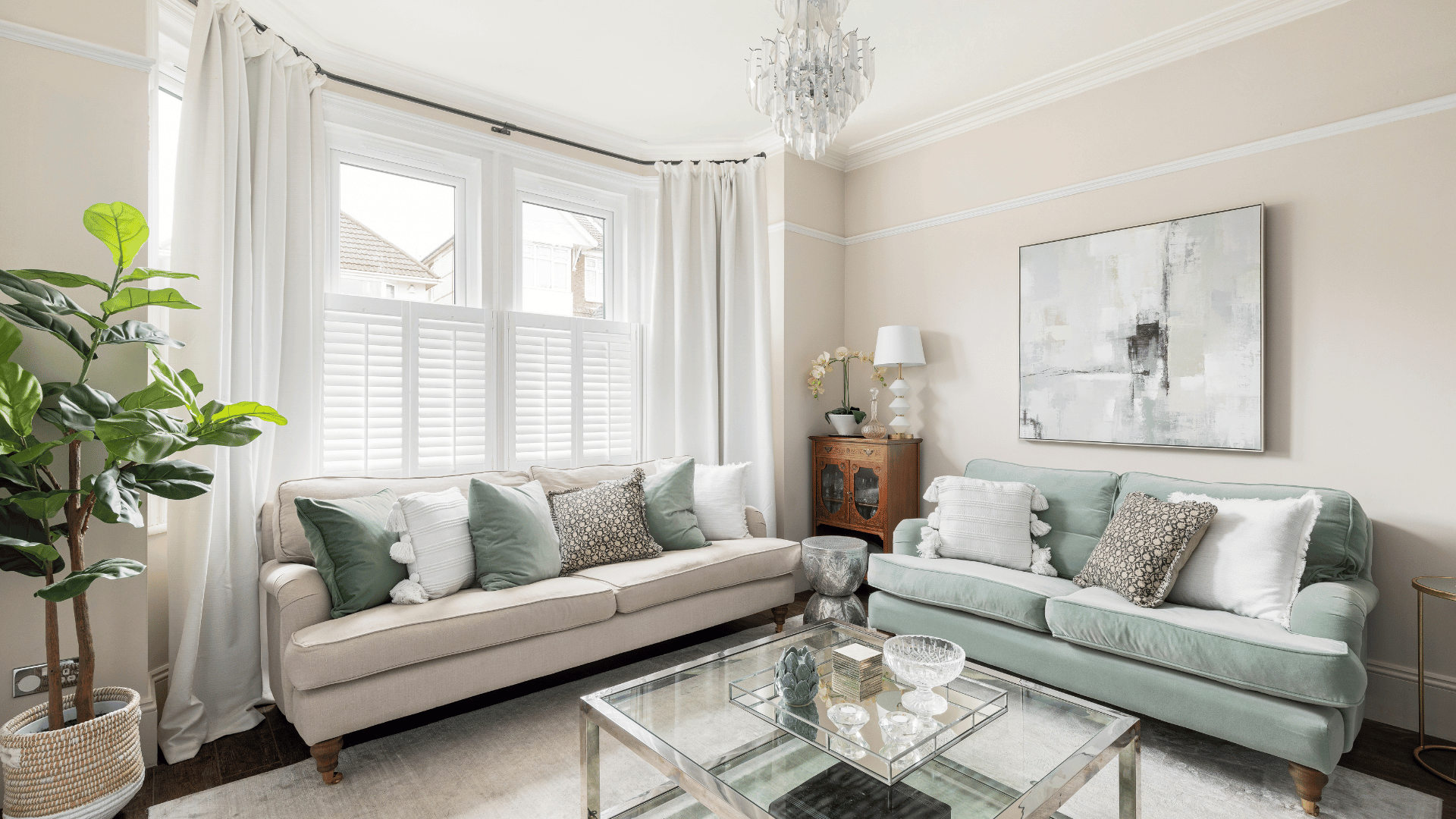
A bay window is one of the finest architectural assets a living room can possess. Originally designed in the Victorian and Edwardian eras to flood interiors with natural light and maximise floor space, they are every home’s absolute delight.
However, their non-standard angles and expansive glass can often present a design dilemma. It is an easy mistake to overcrowd it with standard furniture that blocks the light. Instead, here is how to unlock its full potential by focusing on structural symmetry and tactile zoning.

1. The Micro-Architecture Strategy
Instead of trying to force a rectangular console table or an awkward freestanding chest into a curved or multi-angled recess, look at the bay window as a framework for custom joinery. The goal is to echo the angles of the window without anchoring a heavy block to the floor, which can make the recess feel cramped and cut off.
The Floating Arc Desk or Console
Commissioning a custom floating console that traces the exact internal silhouette of the bay window creates an elegant profile. By cantilevering the structure from the wall, meaning it has no legs touching the floor, you maintain a completely uninterrupted view of the floorboards or carpet underneath. This visual trick expands the perceived footprint of the room.
On top, it can serve as a minimalist, light-filled workspace or a sleek display area for structural ceramics and art; underneath, it offers a clean, negative space that keeps the window area feeling airy and open.
The Integrated Pet Sanctuary
For households with pets, the lower recess of a bay window can be converted into high-end, integrated architecture. Designing a low, custom-painted joinery unit that matches your skirting boards can create a sleek, built-in den or feeding station for a dog or cat. This seamlessly incorporates your pet’s needs into the room’s design, keeping unsightly plastic bowls or bulky pet beds hidden away from the main seating layout.

2. Advanced Curating
A bay window is essentially a natural lightbox. Everything you place directly in front of it is cast in profile against the light, meaning the outline of your furniture becomes just as important as its texture or colour.
Low-Profile Seating
If you want to position seating within the bay to take advantage of the view, avoid high-backed armchairs, which slice through the window frames and block the natural light. Instead, source a low-slung accent chair with a rounded or sculptural back.
When framed against the daytime light, the smooth curve of the chair forms a striking silhouette. Materials like woven rattan, cane, or iron frames work beautifully here, as their open structures allow light to filter straight through the furniture and into the deeper zones of the living room.
The Gallery Plinth Focus
If your main living room layout doesn’t require extra seating, treat the bay window as an art gallery. Position a singular, monolithic stone or plaster plinth exactly in the center of the bay’s geometry. Topping this plinth with a dramatic sculpture or a singular botanical statement creates a stunning architectural focal point that anchors the entire room from the moment you step through the door.

3. Radical Textiles
The angles of a bay window make traditional window dressings notoriously tricky. Standard curtain tracks often bunch up awkwardly in the corners, stealing light and hiding the window’s beautiful timber or stone columns.
Tensioned In-Frame Blinds
Instead of hanging heavy fabric across the entire opening, install tensioned pleated or honeycomb blinds fitted directly into the bead of each glass pane. These blinds operate without cords or chains and move flush with the window frames.
When fully retracted, they become virtually invisible, exposing every bit of original woodwork and glass. When lowered, they act as translucent parchment screens that diffuse harsh glare into a soft, ambient glow while preserving the crisp, geometric lines of the bay.
The Hidden Recessed Track
If you like the softness of flowing fabric, avoid bulky exterior curtain poles. Instead, have a specialist curtain track recessed directly into a custom-built plasterboard ceiling slot that follows the precise contour of the bay. This allows elegant sheer curtains to drop effortlessly out of the ceiling architecture itself, cascading down like a soft wall of light without any visible hardware disrupting the view.

4. Optical Levelling
The temperature fluctuations and abundance of natural light inside a bay window create an ideal microclimate for plants. However, clustering mismatched terracotta pots on the sill can quickly look untidy.
The Monomaterial Planter Trough
To achieve a clean, high-end look, design a custom linear planter trough made of a single premium material, such as polished concrete, darkened patinated steel, or honed marble, that fits across the windowsill. Planting this trough with a uniform row of a single plant species, like elegant snake plants or structured ferns, creates an architectural ribbon of green that screens the lower half of the window for privacy while letting sunlight pour over the top.
The Sunken Floor Terrarium
In homes with deep bay windows that extend down to the ground, you can lift the floorboards within the bay to construct a glass-topped interior planter or gravel garden. This architectural feature creates a striking indoor oasis that brings a touch of nature directly into your living room’s floor plan, serving as a great talking point for guests.

5. Symmetry Alignment
A bay window can sometimes pull a room’s layout off-balance because its deep recess shifts the visual weight of the space entirely to one side. To fix this, you need to establish structural symmetry across the rest of the living room.
Counter-Weight Joinery
If your bay window sits on the front wall of your living room, balance that architectural weight by building deep, bespoke cabinetry or a floor-to-ceiling library on the opposite wall. This draws the eye across the entire length of the room and balances the layout.
The Radial Rug Technique
Rather than trying to force a standard square or rectangular rug to line up with the odd angles of the bay, anchor your main seating arrangement with a large, premium round wool rug. The soft radius lines of a circular rug intuitively coordinate with the curved or angular projection of the bay window, pulling the different zones of the room together into a balanced, harmonious space.

FAQ:
Blinds fitted individually to each section of the window are a practical option because they preserve the shape of the bay and allow flexible control over light and privacy. Alternatively, a fitted or recessed curtain track can follow the shape of the bay without concealing too much of its architecture.
Yes, but choose pieces that do not block too much natural light. Low-backed chairs, window seats, slim desks and lightweight furniture generally work better than tall or bulky pieces positioned directly against the glass.
A bay window can become a reading area, compact workspace, window seat, plant display or decorative focal point. Bespoke furniture can be especially useful because it can follow the unusual angles of the window and make better use of the available space.
Keep furniture relatively low and avoid overcrowding the recess. Light-filtering blinds, streamlined window treatments and furniture with open or slender frames can add function and character while allowing daylight to reach further into the living room.
