
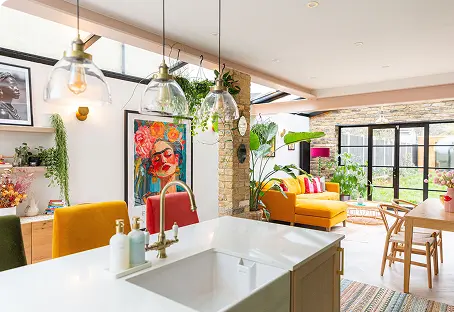
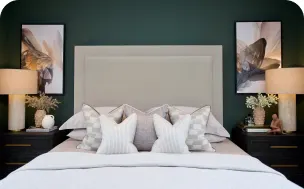
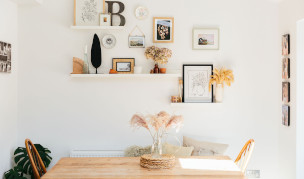
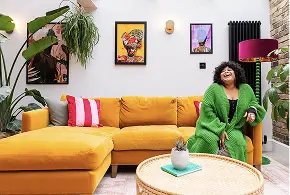


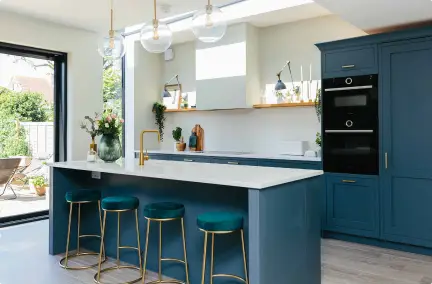
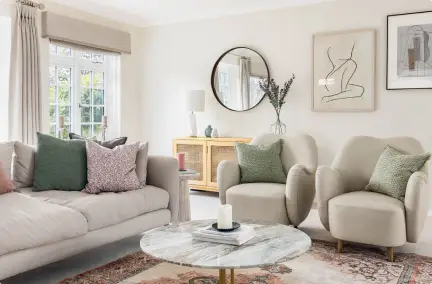
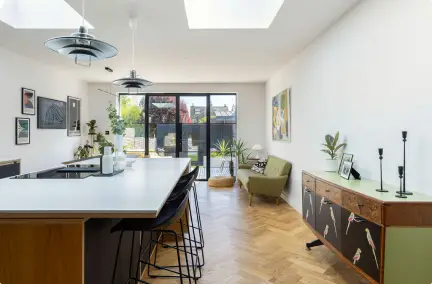
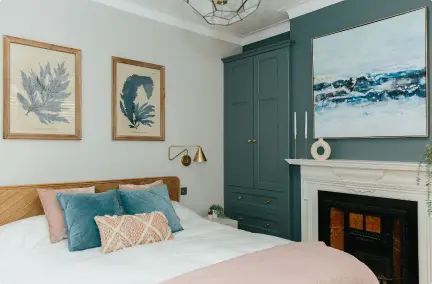









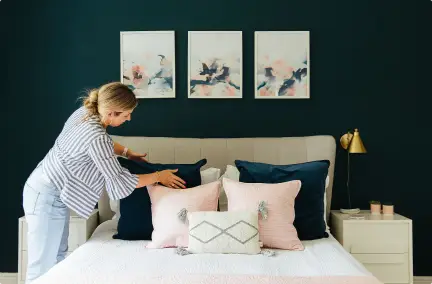
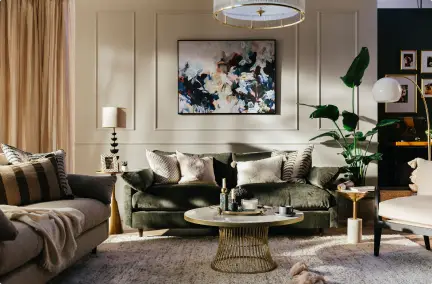

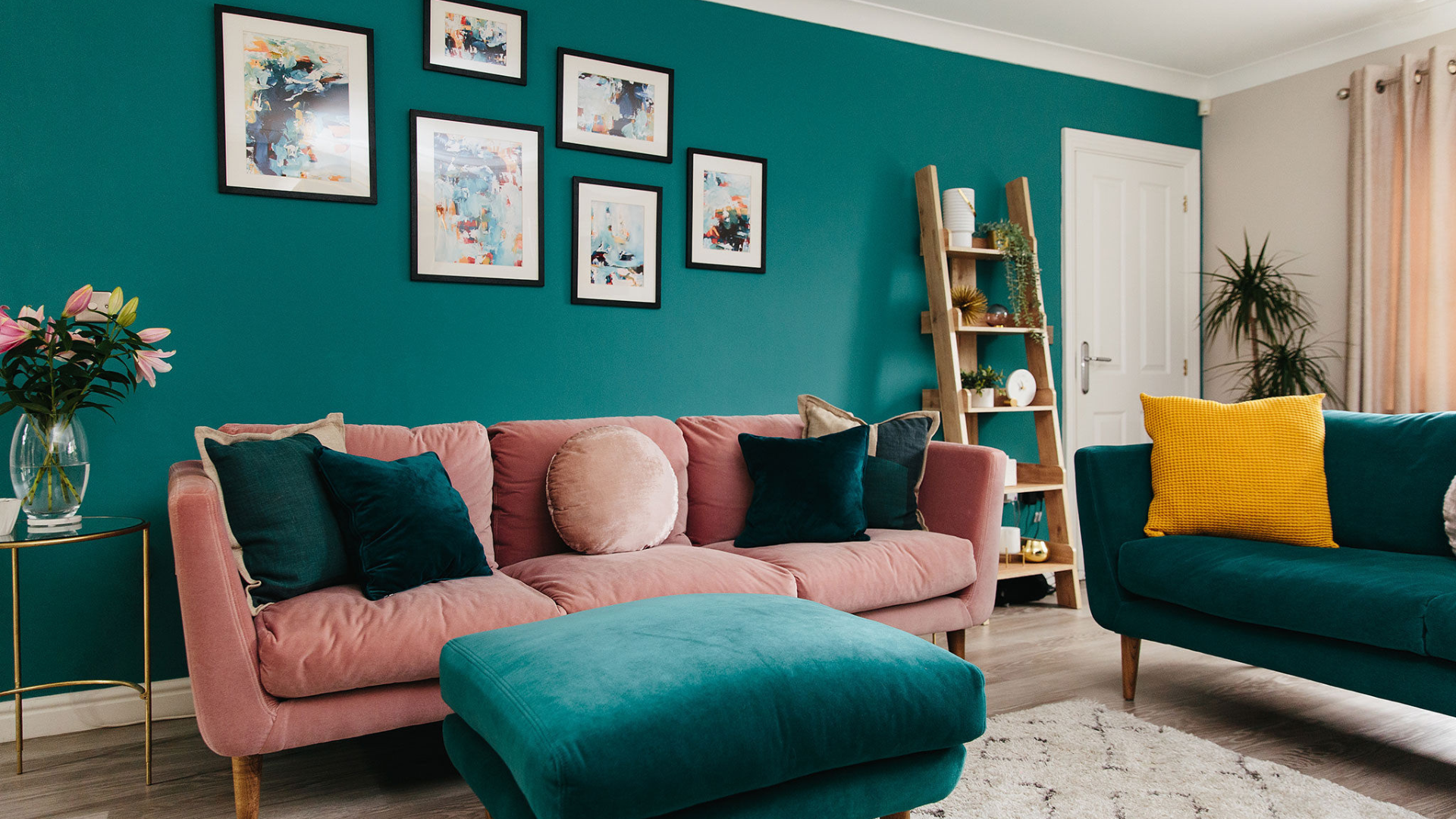
You know the wall we’re talking about. The endless, blank expanse of plasterboard that seems to stretch into the neighbour’s house. Maybe it runs the full length of an open-plan lounge, or perhaps it’s just a cavernous surface in a newly extended room.
While generous square footage is always on our interior design wishlist, a long, unbroken wall can leave a living room feeling stark, echoing, and surprisingly sterile.
At My Bespoke Room, we treat long walls as canvases rather than design dilemmas. If you want to transform that vast vertical stretch into the star of your home, here are six clever ways to break up a long living room wall.

1. Frame the Space with Oversized Curtains & Portières
Who says window drapes have to stay strictly in the corners? If your long wall features a window or double doors anywhere along its span, you can use generous textile draping to divide the wall into distinct visual zones.
Extend your curtain track or pole across a wider section of the wall than the window itself requires. By hanging full-length, double-width drapes – think rich bouclé, heavy-weight velvet, or slubby linen – you create soft, textured vertical columns that immediately interrupt a flat expanse of paint.
The soft folds break up rigid architectural lines, introduce warmth, and add a layer of sound-absorbing acoustic comfort to an echo-prone living room.
- Pro tip: For a cosy, traditional touch, consider adding a portière curtain over an interior doorway or reading nook along that same wall to break the surface into separate functional zones.

2. Introduce Depth with Asymmetrical Recesses
When a wall feels too long, it’s usually because it lacks depth. Instead of attaching things onto the surface, consider stepping into it by creating shallow, asymmetrical stud-wall recesses or niches.
By bringing a section of your wall forward with lightweight timber framing, you can create bespoke inset alcoves. Paint the back of these recessed niches a slightly deeper tone than the surrounding wall, or light them softly from above with warm LED strip lighting.
Adding real physical dimension completely alters how light bounces across the room, transforming a monolithic flat surface into a sculpted architectural detail.
- Pro tip: Keep the niches asymmetrical—a mix of tall vertical cut-outs for ceramics and lower horizontal slots for art styling feels modern and effortlessly tailored.
3. Position an Anchor Piece Away from the Wall
A common impulse when faced with a huge wall is to push every piece of furniture flat against it. The result? A living room that feels like a dance hall.
Instead, pull your layout away from the perimeter. Position a grand, low-slung credenza or an upholstered bench midway down the wall, leaving breathing room behind it. Pair this with a high-backed reading chair angled slightly inward, anchored by a sculptural floor lamp.
By creating a distinct “destination point” along the wall rather than lining up furniture like a train carriage, you break the wall into a series of smaller, cosy vignettes.
- Pro tip: Hang a single piece of statement wall lighting—like an articulated arm sconce—directly above the chair to clearly mark out this reading corner as its own mini-room.

4. Install Sculptural 3D Wall Art & Metalwork
If you want to avoid flat frames, look beyond traditional prints and canvases. Three-dimensional, sculptural wall art introduces texture, shadow, and tactile interest that draws the eye inward rather than across.
Think woven fibre art, ceramic wall discs, brass metalwork sculptures, or framed plaster reliefs. Because these pieces cast real shadows as natural light shifts throughout the day, they create an ever-changing visual landscape along an otherwise static wall.
As a rule, 3D objects break up a flat surface through dynamic light play without cluttering the floor space underneath.
- Pro tip: Hang sculptural pieces in an informal, offset cluster of odd numbers (three or five works brilliantly) to create a sense of movement along the wall’s midline.
5. Layer Tall Textile Screens & Freestanding Room Dividers
If you’re renting or simply don’t want to commit to heavy building work, folding room dividers and floor-standing screens are your best friends.
Position a three-panel woven cane, fabric-upholstered, or lacquer screen slightly off-centre against the long wall. You can fold it open just enough to create a textured backdrop for a tall floor plant, a statement urn, or an umbrella stand.
A screen breaks the continuous visual line of the skirtings and wall paint, acting like an architectural partition without taking up significant floor space.
- Pro tip: Choose a screen material that contrasts sharply with your wall finish—for example, a natural rattan screen set against a dark plum or olive wall.
6. Play with Vertical Scale via Open Room-Divider Units
Instead of solid shelving pushed hard against the plaster, opt for open-backed, floor-to-ceiling modular shelving units positioned perpendicular to the long wall (or placed flush as a frame).
An open-backed shelving frame allows wall paint and light to filter through while physically breaking the wall into two distinct functional halves—for instance, separating a lounging zone from a home office desk or dining nook.
This establishes clear boundaries without blocking sightlines or natural daylight, giving a long, open-plan space a clear sense of rhythm and purpose.
- Pro tip: Style open shelves sparsely with curate-worthy items—a mix of stacked art books, trailing foliage, and sculptural objects—so the wall behind remains a subtle backdrop rather than a cluttered mess.

Quick Design Rules for Tackling Big Walls
Keep these three Golden Rules in mind before styling your space:
- Vary your height lines: Avoid placing everything at eye level. Mix low-slung sideboards with tall vertical elements, such as floor lamps or hanging drapes, to guide the eye up and down.
- Mind the negative space: You don’t need to fill every single square inch. Leaving deliberate gaps between zones allows the room to breathe and prevents visual overload.
- Anchor with lighting: Ambient wall lights, picture lamps, and low-level floor lights break up vast wall spaces in the evening when natural daylight fades.
Struggling with your layout? Why not try our Design Fix for just £195 per room, and we’ll help sort your tricky layout fast!
FAQ:
Divide the wall into smaller visual sections rather than treating it as one continuous surface. Artwork, shelving, furniture, curtains, lighting or architectural details can each create individual focal points along its length.
Either approach can work. One oversized piece creates a strong focal point, while a gallery-style arrangement can introduce more movement across the wall. Choose a scale that relates to the furniture below rather than leaving artwork floating in the middle of a large empty space.
Use a few larger elements with deliberate gaps between them. A sideboard, statement artwork, floor lamp or tall plant can break up the wall while preserving enough negative space to keep the room feeling balanced.
Yes. Instead of lining several pieces continuously against the wall, create separate furniture groupings or zones. A sideboard, reading chair or open shelving unit can give different sections of the wall their own purpose and make a large room feel more intimate.
