




















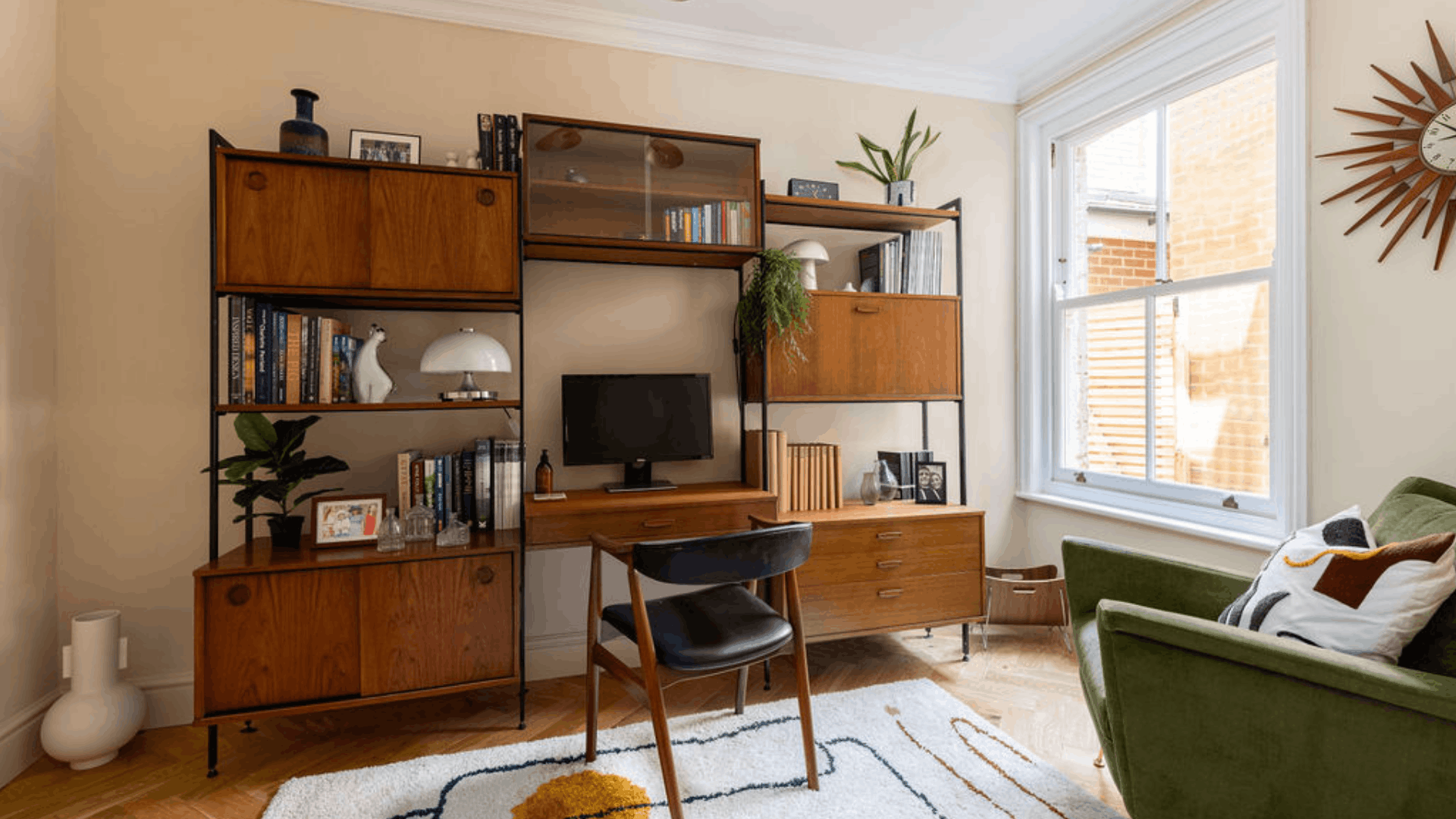
You’ve spent weeks picking the perfect wall colour, sourcing a soon-to be-CEO desk, and finding a chair that doesn’t ruin your back. Everything is ready for you to lock in, until you plug everything in.
“Cable spaghetti” is the ultimate interior design buzzkill. It draws the eye straight to the floor, catches dust, and instantly ruins the aesthetic harmony of a room.
At My Bespoke Room, we believe tech should support your workflow, not hijack your decor. Here are our favourite design-led, clever hacks to hide wires in your home office and keep your workspace looking effortlessly polished.

1. The Tailored Fabric Modesty Panel
If your desk sits out in the middle of the room or faces a doorway, the rear view of dangling cables, power blocks, and multi-sockets can be a real eyesore. Instead of trying to tape wires to furniture, wrap the back of your desk in style.
A custom fabric modesty panel is a secret weapon used by interior designers. You can attach a beautifully textured fabric—like a heavyweight linen, velvet, or a fun patterned print—across the back legs of your desk using hidden Velcro straps or a small tension rod.
This instantly blocks the tangled nightmare behind your desk from view while introducing a soft, luxurious texture that elevates the entire room.
- Pro tip: Match the fabric to your window blinds, seat cushion, or accent cushion to make it look like an intentional design choice rather than a cover-up.

2. Convert a Desk Drawer into a Secret Power Hub
Why let phone chargers, tablet cables, and laptop bricks clutter your desktop at all? Turn your top desk drawer into a hidden charging station.
With a hole-saw drill bit, carefully create a small circular opening at the back of your desk drawer. Pass a slim surge protector or multi-USB strip into the back of the drawer and secure it inside with heavy-duty mounting tape.
This way, all your daily gadgets can sit comfortably inside the drawer while charging. When you’re done working, simply close the drawer, and your desktop remains 100% cable-free.
- Pro tip: Line the inside of the drawer with felt or cork to protect your devices from scratches while they juice up.
3. A Chic Woven Basket
Standard plastic cable management boxes do the job, but let’s be honest: they look like standard plastic boxes. If you want something that adds warmth and natural texture to your office decor, turn to handcrafted storage baskets.
Find a small-to-medium woven seagrass, rattan, or felt basket with a fitted lid. Carefully cut a small, neat slit near the bottom on the back side of the basket. Pop your extension lead and heavy transformer blocks inside, then run the single main power cord out through the back slit to your wall outlet.
This disguises an ugly nest of power adapters as an artisanal decorative accessory resting neatly beside your desk.
- Pro tip: Choose a basket with handles so you can easily lift the lid to plug in new accessories without having to haul out the whole setup.

4. Architectural Wall Moulding & Dado Rail Channels
If your home office features period details like picture rails, dado rails, or wall panelling, you can use them to your advantage.
Instead of slapping ugly white plastic conduit onto your walls, look for timber or paintable decorative wall trims designed with hollow channels along the back. You can run wires through these mouldings and paint them in the same shade as your walls (using a colour-drenched palette like deep navy or forest green).
This way, the cables are fully encased inside structural detailing that looks like it has been part of the house for a century.
- Pro tip: If you don’t have panelling, installing a decorative dado rail at desk height creates a natural architectural line to hide horizontal runs of cable behind.
5. The Curtain Drop Concealment
Is your home office desk positioned next to a window? You’re sitting on a brilliant built-in disguise.
Instead of letting main power cables trail across the floor from a distant wall socket, route your main extension lead vertically up behind your window drapes. You can attach slim fabric loops or clear fabric clips to the back lining of your heavy curtains to keep the wire tucked tightly out of sight.
Heavy curtain folds naturally create shadow and depth, swallowing up dark cables without requiring any structural modifications.
- Pro tip: Ensure the cable has enough slack so that closing or opening your curtains during the day won’t tug on your electronics.

6. Stackable Decorative Storage Boxes
If you have open shelving near your desk or a stack of books nearby, use decorative storage boxes with hidden rear cut-outs to manage your tech.
Buy a set of matching pattern-printed or cloth-bound memory boxes. On the bottom box, cut a small opening in the back panel. Place your internet router, power strip, or hard drives inside. Stack the remaining decorative boxes on top to create a stylish vignette.
This turns necessary tech infrastructure into a chic bookshelf display that looks entirely intentional.
- Pro tip: Make sure the box housing tech equipment has adequate ventilation holes on the back or bottom so heat can escape safely.
7. Colour Camouflage
Sometimes, a wire simply has to be visible for a short distance between the desk and the wall. When you can’t hide a wire, turn it into a feature or make it vanish into the background paint.
Ditch standard plastic spiral wraps in favour of braided fabric cable sleeves in rich tones like brass, tweed, or charcoal. Alternatively, if your wire runs along a painted wall, paint the braided sleeve in the same wall paint shade using a flexible fabric primer and paint.
Braided fabric covers transform cheap plastic wires into tactile, high-end details, while colour-matching allows wires to blend seamlessly into the backdrop.

Quick Design Rules for a Cable-Free Office
Before you dive into your wire-hiding weekend project, keep these core principles in mind:
- Audit before you hide: Unplug everything first. Discard duplicate cables, zip-tie excess lengths, and label both ends of every cord so you know what you’re pulling out later.
- Prioritise safety: Never tightly bend power cords or crowd heat-generating adapters into unventilated spaces. Safety always comes before aesthetics!
- Think about access: Don’t box in cables so tightly that taking your laptop charger on a business trip requires a full demolition effort.
