
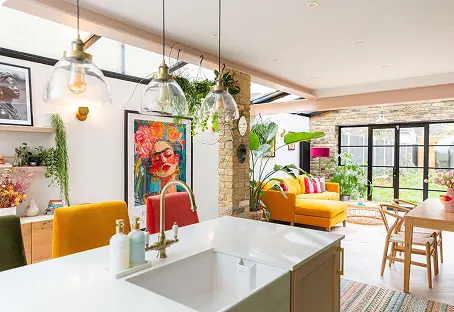
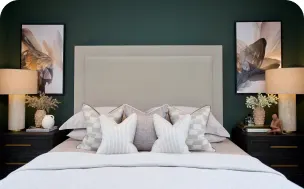
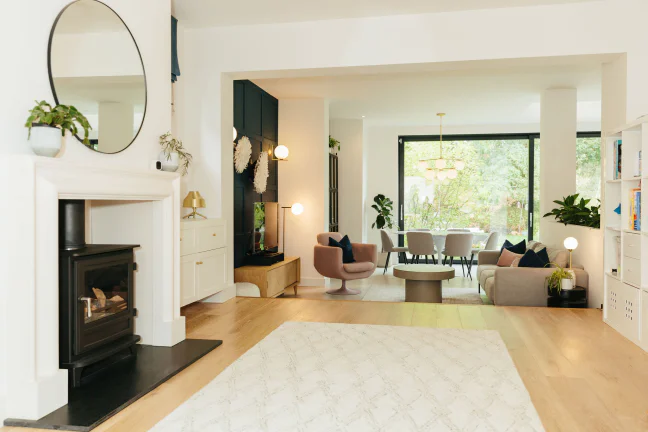
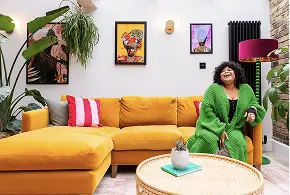













Obsessed with loft apartments with exposed brickwork and raw textures? You may like Industrial Interior Design.
At My Bespoke Room, we see modern architectural design as a celebration of authentic building materials and functional form, reimagined into a warm and comfortable space for everyday family living.
Let’s dive into what industrial interior design actually means, trace its architectural roots, unpack the key design pillars and show you how to bring this style into your home without it feeling clinical.

From Function to Form
Industrial interior design was born out of practical needs during the late 20th century. As manufacturing shifted away from city centres, historical factories, textile mills and warehouses across London, New York and Chicago were left empty.
Instead of tearing down these structures, creative city dwellers began converting them into residential lofts. Rather than covering up the building’s working bones, they embraced them. Exposing support beams, brick walls and steel ductwork, this way of living on a budget evolved into a global design movement.
Today’s industrial look builds on those utilitarian roots, pairing raw structural elements with rich textures, warm lighting and plush furnishings to create spaces that feel both atmospheric and inviting.
Key Elements of Industrial Interior Design
Looking to introduce an industrial edge to your home? Here are the core pillars our designers use to curate character-rich industrial interiors:
1. Raw Building Materials
The defining hallmark of industrial style is showing off what makes a building tick. Rather than hiding structural features behind plasterboard, industrial design leaves them proudly on display:
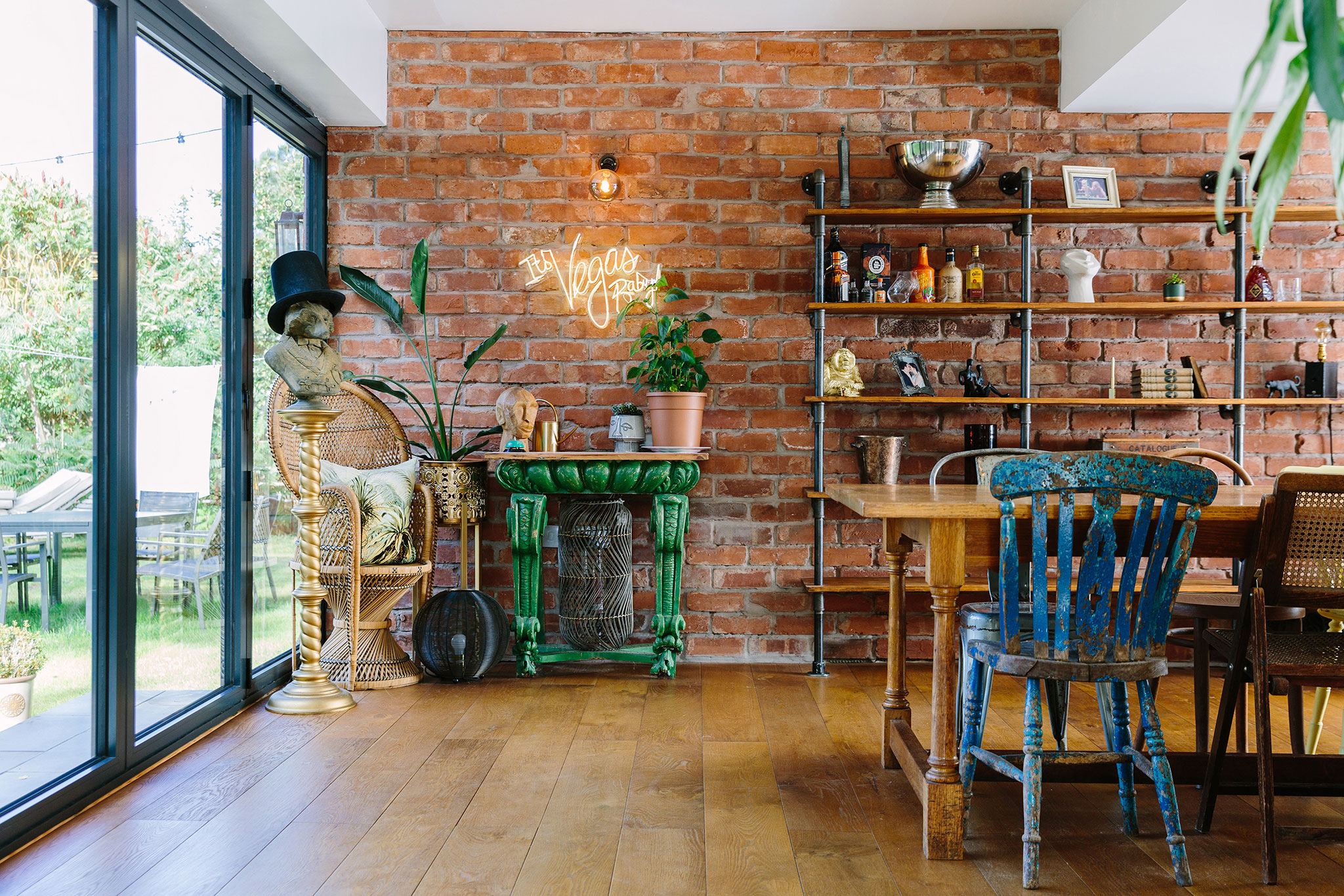
- Exposed Brickwork: Original red or yellow stock brick walls bring pattern and historical charm.
- Concrete Surfaces: From polished concrete floors to micro-cement feature walls, concrete provides a sleek, tactile backdrop.
- Structural Steel and Pipes: Black iron pipes, exposed metal beams and visible ventilation ducts celebrate engineering as style itself.

Explore this room design with industrial features >
2. An Earthy Colour Palette
Industrial colour schemes take their cues from the materials used in heavy industry and vintage machinery:
- The Foundation: deep charcoal greys, slate, matte black and rich espresso browns ground the space.
- Warm Contrasts: To balance cooler metals, introduce warm terracotta, rich rust orange, cognac leather and aged timber tones.
- Muted Neutrals: Soft plaster, warm grey and off-white give eyes a resting spot and maximise natural light.

3. Tactile, Time-Worn Textures
When working with hard structural elements like iron and brick, texture is essential for making a house feel like a home. Industrial interiors thrive on contrast:
- Aged Leather: A distressed leather sofa in deep tan or vintage black instantly adds character and lived-in charm.
- Reclaimed Wood: Salvaged timber with visible knots and grain softens hard metallic lines.
- Tactile Fabrics: Layering chunky wool throws, textured canvas, slubby linen curtains and velvet cushions balances the utilitarian backdrop.

4. Statement Metalwork and Utilitarian Lighting
Lighting plays a huge role in setting the relaxed atmosphere characteristic of industrial homes:
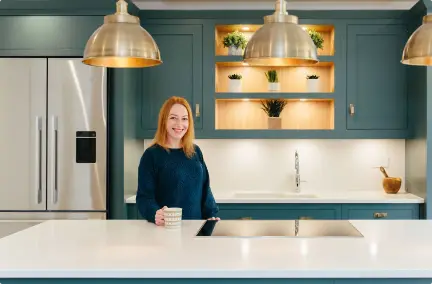
- Pendant Lights: Metal dome lights, wire cage fixtures and oversized factory pendants over kitchen islands make a focal point.
- Exposed Bulbs: Filament and Edison bulbs mounted on brass or black iron pipework cast a warm, golden glow.
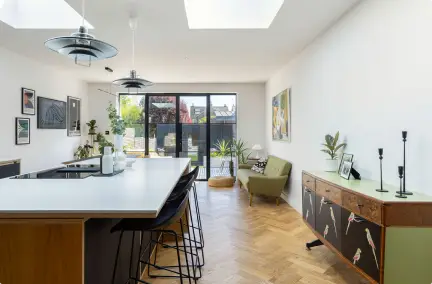
- Crittall-Style Doors: Slim black steel-framed doors and room dividers allow light to flow freely across open-plan layouts while maintaining clear zone definitions.

View this bright open plan room design with crittall patio doors >
Room-by-Room Industrial Styling Guide
Ready to get the look? Here is how to style industrial interior design across your home:
The Living Room
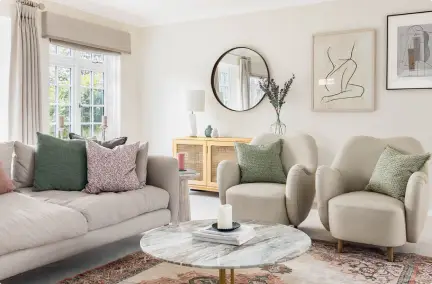
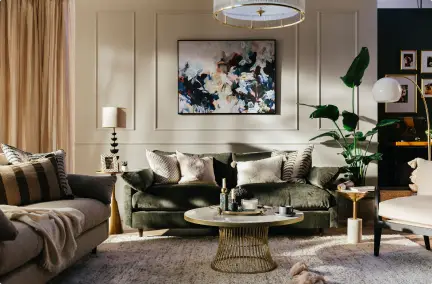
Your living room should be a relaxing space that balances raw architectural features with comfort.
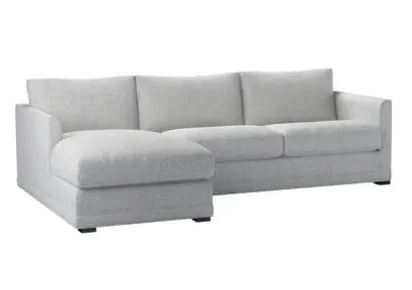
- The Anchor: Choose a comfortable sofa in distressed cognac leather or charcoal velvet.
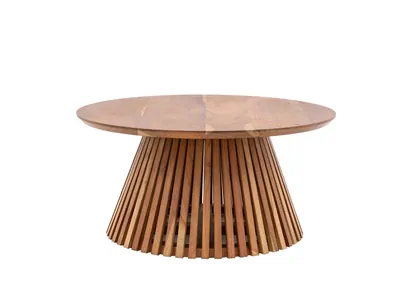
- The Coffee Table: Pair your seating with a low-slung coffee table crafted from reclaimed scaffold boards set on a black iron hairpin or cast-iron wheel base.
- Finishing Touches: Frame a large-scale piece of abstract art or vintage patent drawings and layer a thick-texture wool rug beneath the seating area to anchor the space.

Take inspiration from this masculine industrial living room design >
The Kitchen and Dining Room
Industrial kitchens and dining rooms have to be high-performing, yet stylish:
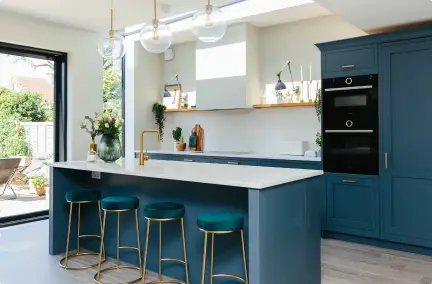
- Cabinetry: Opt for flat-panel cabinet doors in matte dark grey, navy or natural dark oak paired with knurled brass or matte black handles.
- Countertops & Backsplash: Pair stainless steel or concrete-effect quartz countertops with a backsplash of metro tiles or raw brickwork.
- The Dining Area: Set an expansive reclaimed wood dining table surrounded by mix-and-match metal dining chairs or a long wooden bench. Hang a row of metal dome pendants overhead.

The Bedroom
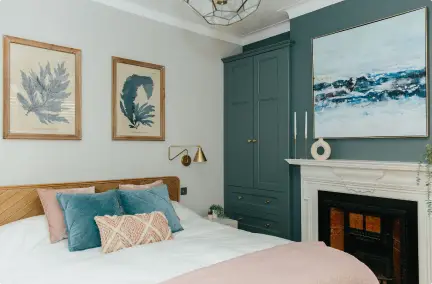
To keep an industrial bedroom feeling calm and cosy, lean into soft textures and warm accent lighting.
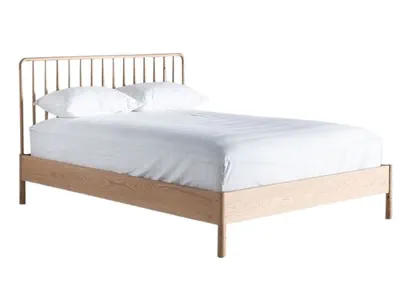
- The Bed: A black iron bed frame or a low platform bed made from rich walnut timber creates a sleek focal point
- Bedding: Dress the bed in washed linen sheets in tones of sage, rust or deep grey. Layer with a chunky knit blanket.
- Storage and Lighting: Replace bulky traditional bedside tables with open metal shelving or vintage metal lockers. Add swing-arm wall sconces in matte black or aged brass for cosy reading light.

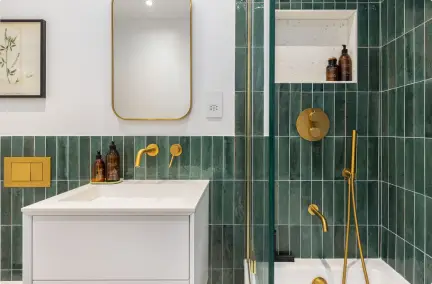
The Bathroom
Bathrooms require that crisp industrial detail:
- Tiles and Vanity: Combine concrete-look floor tiles with white metro tiles on the walls. Install a floating timber vanity topped with a matte counter basin.
- Fixtures: Choose exposed pipework shower valves and black brushed bronze taps.
- Mirror: Finish the room with a large, black-framed Crittall-style mirror to bounce light around the room.

Explore this bathroom design >
Common Pitfalls to Avoid
Striking the right balance with industrial design takes a delicate touch. Watch out for these common design traps:
- Making It Too Cold: Relying solely on concrete, steel, and cold greys can make a room feel like an office or garage. Always balance hard surfaces with warm woods, tactile fabrics, and warm-toned lighting (2700K bulbs).
- Over-Theming: You don’t need to turn your home into an industrial museum! Avoid buying mass-produced “industrial” novelty items. Instead, focus on authentic materials and curate pieces over time.
- Ignoring Natural Light: Dark metalwork and brick can absorb light. Keep window treatments minimal—such as sheer linen drapes or simple black bladed blinds—to let daylight flood in.
Have a room in mind? Let’s talk!
Book a FREE 30-minute Designer Call with one of our experienced interior designers.
Tell us about your room, what you’re struggling with and what you’d love to achieve. We’ll listen, talk through your ideas and explain how we could help.

And if you’re not quite sure what your style actually is, take our 2 minute interior style quiz and we’ll show you.
FAQs
Industrial interior design is defined by exposed building structures—such as raw brickwork, structural steel beams, concrete, and visible pipework. It features a neutral, earthy colour palette (greys, blacks, browns, and rust), clean utilitarian silhouettes, reclaimed timber, and functional metal lighting fixtures.
To keep an industrial home from feeling cold, layer warm materials and textures alongside metallic and concrete surfaces. Incorporate distressed tan leather, reclaimed timber furniture, soft wool rugs, linen curtains, and ambient warm lighting with exposed filament bulbs.
Yes, absolutely! You don’t need a factory conversion to enjoy industrial style. Introduce character in a new-build home using Crittall-style doors, micro-cement or brick-slip feature walls, reclaimed wood furniture, metal-framed lighting, and matte black hardware.
