












In today’s modern homes, we don’t just use our living rooms for hosting. Nowadays, a living room can also be a home office, a movie theatre or even a meditation space. Traditional, rigid seating arrangements can sometimes lag behind these shifting needs. But the best modular sofas are designed to keep up with them.
Unlike conventional fixed sofas, modular designs consist of individual “modules” or sections that you can reconfigure, expand, or split apart at a moment’s notice. In other words, a modular sofa is an investment in long-term versatility.
In this guide, we explore the primary benefits of modular seating, key features to look for when buying, top styles for every space, and expert tips on styling your sectional for maximum impact.

Why Choose a Modular Sofa?
The popularity of sectional and modular furniture has surged in recent years, driven by a growing desire for future-proof interiors.
- Versatility: Reorganise your room layout for a party, convert your sofa into a guest bed, or split the sections into separate accent chairs when you need extra floor space.
- Easy Access and Delivery: Moving traditional three-seater sofas into top-floor apartments can be a nightmare. To fix this, modular sofas arrive in smaller boxes that easily fit through tight doorways, stairwells and lifts.
- Future-Proof Design: As your living situation changes, whether you buy a bigger home or grow your family, you don’t need to replace your entire sofa. Most modular ranges let you buy extra middle units or ottomans to expand your setup over time.
- Customizable Layouts: Modular sofas come in all shapes and sizes. Choose from L-shaped sofas, U-shaped conversation pits, or compact two-seaters, and dictate the dimensions yourself.

Click here to view this room design
Key Features to Consider Before Buying
Before selecting your ideal modular set, evaluate these design factors:
1. Connector Mechanisms
The quality of the joining mechanisms is essential for stability. Look for sofas with hidden interlocking steel brackets or heavy-duty rubber alligator clips beneath the units to prevent sections from drifting apart on smooth flooring. Alternatively, some low-slung, heavy modular designs use non-slip weighted bases that stay securely in place without physical locks.
2. Depth and Profile
Consider how you like to lounge. If you prefer upright seating for reading and entertaining; look for mid-century profiles with a shallower seat depth and firmer foam cores. If you prefer more passive rest, (like a TV binge), choose deep-seat designs with feather-down blends and low-slung silhouettes.
3. Fabric and Upholstery
Because modular sofas invite frequent movement and heavy daily use, durability is key. High-traffic living spaces benefit from performance fabrics, stain-resistant velvets, or boucle textiles with high Martindale rub counts. If you have children or pets, removable and washable cushion covers are an invaluable feature.
The Best Modular Sofa Styles for Every Home
The Grounded Lounger
Inspired by 1970s Italian design, low-slung modular sofas sit directly on the floor without visible legs. Characterized by deep channel tufting, plush contours, and soft, organic curves, these sofas convey rest and relaxation. They work brilliantly in modern, minimalist, or Japandi-inspired interiors, keeping sightlines low and making ceilings feel loftier.

Click here to view this room design
The Contemporary Sectional
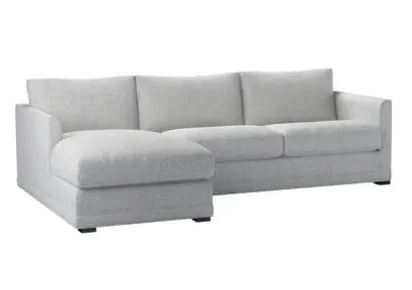
For a crisp, tailored look, contemporary sectionals combine sleek metal or timber feet with structured armrests and clean geometric shapes. These models often feature reversible chaises and movable ottomans, making them ideal for urban apartments and open-plan living rooms where you want a sophisticated, clutter-free aesthetic.

Explore some of our designers’ favourite modular sofas below:
Sloane Modular Sofa – Sofa.com
Cuddlemuffin Modular Corner Sofa – Loaf
The Family U-Shape
U-shapes are for families and movie nights. By placing corner modules at both ends and connecting them with armless central seats, you create a seating pit that encourages conversation while giving everyone room to stretch out comfortably.

Click here to view this room design
The Two-to-Three Seater
Modular furniture isn’t just for grand living rooms. Compact modular systems allow owners of smaller spaces to enjoy sectional lounging. A simple setup featuring two arm modules and a matching ottoman can function as an L-shaped sofa during the week and transform into a footstool and separate armchair when guests visit.

Click here to view this room design
Expert Tips for Styling a Modular Sofa
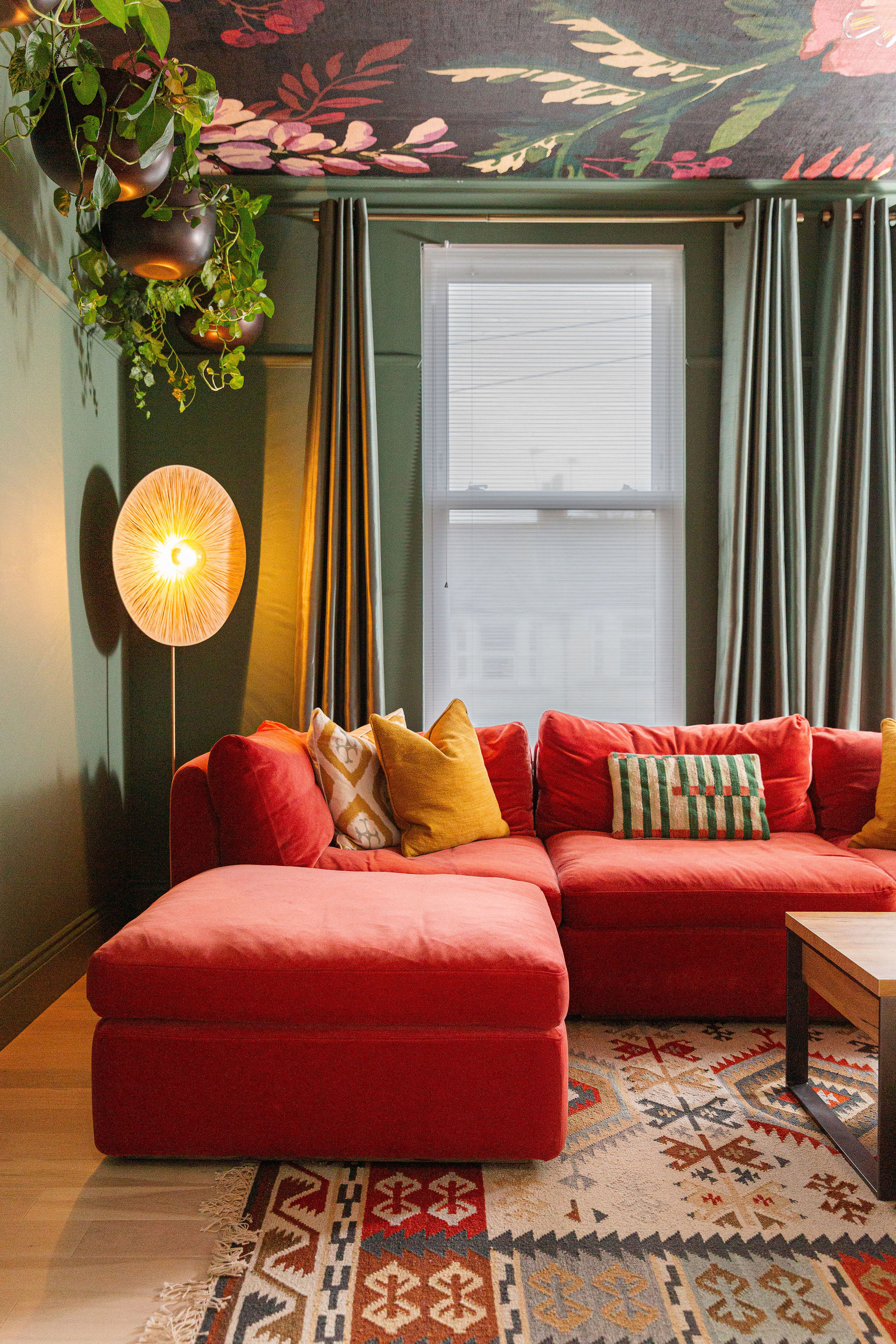
- Anchor with a Large Area Rug: To unify the sofa’s separate blocks, ground an area rug. Ensure at least the front legs or bases of every module rest on the rug.
- Layer Textures, Not Clutter: Try to leave some negative space on the sofa. Select a few oversized scatter cushions in contrasting textures—such as washed linen against rich velvet—and layer a soft wool throw over an armrest.
- Balance the Layout with Lighting: Pair your modular setup with sculptural floor lamps or low pendant lights to define cozy zones within the room, particularly around corner or chaise sections.
- Use Ottomans strategically: Use the modular ottoman for its double duty . Use it as a footrest, pull it out for extra seating, or top it with a sturdy wooden tray to act as a central coffee table.

Click here to view this room design
Conclusion
Choosing the right sofa is one of the most significant decisions you will make for your living room. A modular sofa eliminates the guesswork of traditional furniture, offering a flexible, stylish, and long-lasting solution tailored seamlessly to your lifestyle. By prioritising high-quality framing, durable performance fabrics, and a silhouette that matches how you truly use your home, you can create your own haven of serenity that easily evolves with you for years to come.
FAQ:
All modular sofas are sectionals, but not all sectionals are modular. A standard section typically comes in fixed, multi-piece configurations (such as a fixed left-hand chaise) that cannot be easily rearranged. A modular sofa consists of fully independent modules you can reorder into multiple layouts whenever you choose.
High-quality modular sofas feature built-in interlocking brackets, alligator clips, or heavy-duty rubber grip feet underneath each module to keep them securely joined. If your sofa uses unclipped freestanding modules, placing a textured area rug underneath or adding non-slip rubber furniture pads to the feet will keep them firmly in place.
One of the biggest advantages of a modular sofa is its delivery convenience. Because the sofa is packed as separate individual modules, the boxes easily fit through tight hallways, narrow staircases, and small elevators that standard three-seater sofas cannot clear.
In most cases, yes. Most leading modular furniture manufacturers design their ranges to be modular long term, so you can buy matching middle seats, corner units, or footstools months or years later as your living space or family grows. It is always best to check with the manufacturer regarding fabric dye-lot consistency when adding pieces later.
