
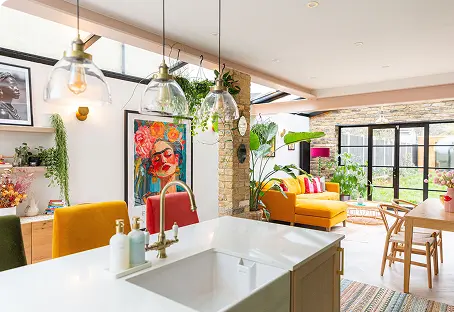
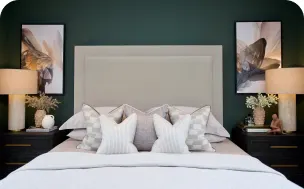
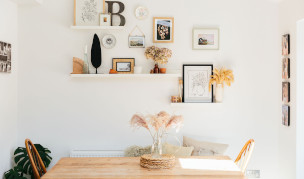
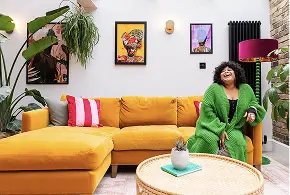













Your living room is one of the hardest-working spaces in your home. It’s where you unwind after a long day, cosy up with family, and also play host when guests drop by.
With so much depending on one room, it might feel tricky to get the design right. That’s where a living room designer comes in. They can take the guesswork out of the process and help you create a room that actually works for the way you live.
How to work with a living room designer
In this guide, we’ll walk you through how to get the most out of working with a living room designer, from finding style inspiration to getting the perfect layout, so you can create a space that functions well, feels comfortable and looks gorgeous.
| Design Element | Going It Alone (DIY) | Working with a Designer |
| Spatial Layout & Flow | Guessing furniture sizes; risk overcrowding the area and losing room function | Space optimisation is baked in from the start ensuring function is paramount. |
| Visual Balance | Random placement of items can lead to rooms feeling flat or cluttered. | Intentional focal points – less is more. |
| Sourcing & Budget | Risk of impulse buys that don’t fit with the room. | Discounts and strategic, highly-focused buys designed to fit seemlessly into the room. |
| Lighting & Mood | Often overlooked, resulting in reliance on harsh overhead light. | Use of ambient and accent lighting to bring space to life without feeling flat. |
| Project Stress | Order tracking, snagging and measurements must be handled by you. | Clear timelines and expert support throughout. |
Key points
- Decide on the style and feel first – make a note of how you want to use the space, how you want to feel in it and the styles you are drawn towards.
- Be aware of design principles – a good designer will apply some design tricks involving zoning, focal points, scale and proportion, circulation, lighting, texture and colour.
- Try out some practical tips – while you wait for your project to start, make some quick updates by getting your rug sizing right, positioning furniture in the right way, adding double-duty storage and adding some greenery.
- Be aware of the design process – Help your project stay on track by knowing how it will work. Key milestones include preparing a brief, providing measurements and photos, clarifying scope and budget, reviewing concepts and finalising and scheduling.
- Get the buying and sourcing right – Avoid costly mistakes by starting with the big pieces first, checking delivery times and return policies, mixing your price points and always sampling before you commit.
- Find inspiration from case studies – whether you have a small space, an open-plan room or a period property, there are some tried-and-tested tips that your living room will tap into.
Pick the feeling you want
Before you focus on details, step back and think about what you want to do in your new living room and how you want the space to feel. Are you hoping to create a cosy, relaxed room, or would you prefer something more clean and contemporary? Do you need flexible, hard-wearing fabrics for informal gatherings, or would you like a room that feels refined and elegant?
A good designer will delve into this at the beginning of your project so that they can create the ideal space for your needs. Let’s take a look at the options.

Cosy and relaxed
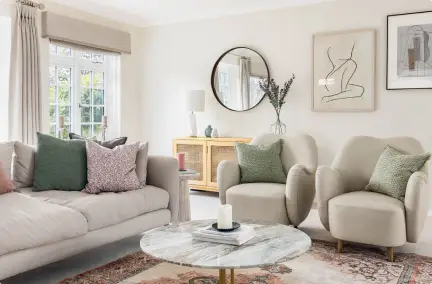
If you love to snuggle up on your living room sofa to watch TV or read a book, then a cosy feel might work for you. To achieve the look, your designer will include plenty of soft shapes and textures.
They may choose a colour palette that feels warm and relaxed and add layered textiles to soften the look even more. Furniture with curved edges works well to bring a comfy feel to a living room, and gentle lighting will give the space a calm, cosy atmosphere.

Clean and contemporary
If your style preference leans towards modern and sleek, your designer will bring in some key elements to make your living room feel fresh and contemporary.
Your professional might choose a restrained colour scheme and specify furniture that’s lighter and pared-back – think Scandi-style tapered legs and pale timber rather than heavy shapes and dark wood. Integrated storage is a good option as it’ll allow you to hide away clutter and keep your living room tidy and minimal.

Sociable and flexible
The living room is perfect for informal gatherings when you and your guests fancy a bit more comfort than the kitchen, so if you’re a social butterfly make sure you talk about this with your interior designer at the outset.
Flexibility is key here, so your professional might bring in some modular seating and moveable furniture that can be repositioned to accommodate more people. You’ll also want some materials that can withstand wear and tear, so your designer will specify durable fabrics and surfaces.

Elegant and collected
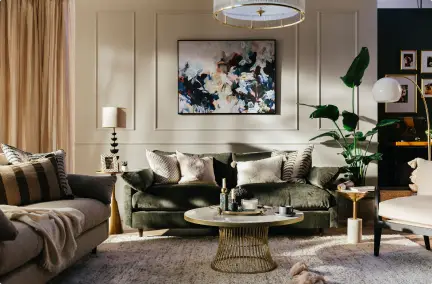
For a more refined living room, some statement lighting and curated artwork will add a touch of elegance. To bring interest to the room, your designer might consider adding mixed textures such as teaming velvet with silky satins, and dark wood with luxurious metallics.
When you’ve decided on the style and feel you want for your living room, look for inspiration in magazines, on Pinterest or at design showrooms, and bring a few of your favourite images to your consultation. This will give your designer a clue as to the type of atmosphere you want to create in your room. A visual brief like this saves time and enables your professional to produce better results.
Design principles every living room designer uses

Interior designers have a few tricks up their sleeves to make sure a living room is both attractive and usable. These can involve layout, lighting, colour and texture. Here are a few that your professional might apply to your space:
Zoning – A large room can feel warmer and cosier if it’s divided into clear zones. By breaking a space into smaller areas, your professional can create a feeling of intimacy and help the room feel more ordered and easier to navigate. Designers will use rugs, lighting and furniture placement to mark out where each zone begins and ends.
Focal point – Every room needs a visual anchor to provide somewhere for the eye to rest amid the confusion of competing objects. Your designer will decide what that focal point is, a fireplace, artwork, architectural feature perhaps, and arrange the rest of the room around it.
Scale and proportion – Getting the scale right so that furniture suits the size of the space is a simple way to make a room feel instantly balanced and harmonious. This and the principle above are both rooted in Gestalt psychology, the study of how humans naturally perceive groups, proportion and visual balance.
Circulation – Your designer will think carefully about how you move through the room, making sure there’s always a clear, easy path rather than an obstacle course of furniture to navigate. This draws on space syntax theory, a field of research into how people experience built spaces, which is why getting the flow of a room right can make it feel instinctively easier to be in, even if you can’t quite put your finger on why.
Layers of light – By layering ambient, task and accent lighting, your designer can help the room change mood effortlessly. Research into lighting and mood has found that softer lighting makes people feel more relaxed, while cooler light can have the opposite effect.
Texture and colour balance – A perfectly balanced palette paired with a thoughtful mix of materials like wood, wool, linen and metal, will prevent your living room feeling flat and will give the space a pleasing cohesive look.
Quick practical ideas to try

Not ready to bring in a designer yet, or just want a few quick updates while you wait for your project to start? Here are some simple tweaks that can make a difference:
Get your rug sizing right – As a rule of thumb, your rug should be big enough to fit the front legs of your sofa and chairs on top of it. The correct-sized rug will help to anchor your furniture in the room, and ensure everything feels balanced and in proportion.
Try floating your sofa – If you’ve got a larger room, pulling your sofa away from the wall can completely transform how the space feels. It will help to zone the seating area and can create a better flow around the room.
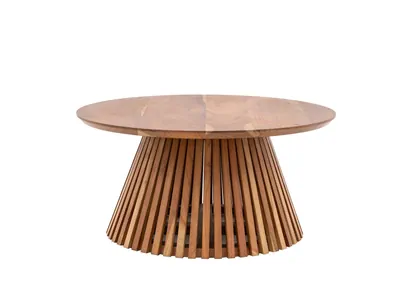
Position your coffee table – Leave around 35-45cm between your sofa and coffee table. This distance is close enough for reaching over to pick up a drink, but far enough that it doesn’t feel cramped.
Let your storage do double duty – There are lots of clever ways to add multifunctional furniture that doubles up as storage. A footstool with a top that opens for example, or a window seat with storage below are both great ways to keep clutter out of sight while providing an extra function.
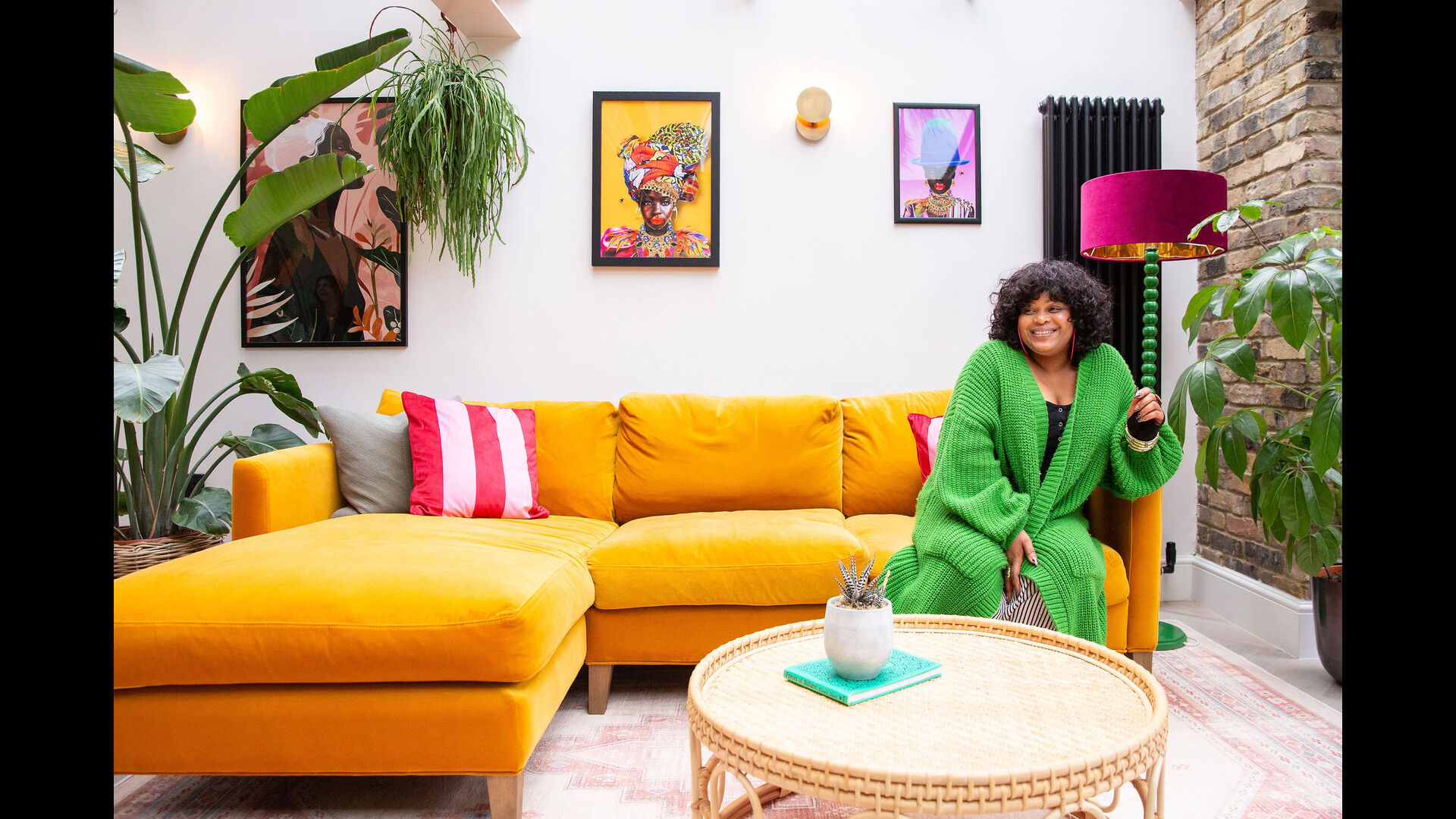
Bring in some greenery – A mix of floor and tabletop plants adds scale, softness and a real sense of life to a room. Plants are also a simple way to add a biophilic element to the room, a concept that has been well researched to show that natural features have a positive impact on wellbeing.
How to work with a living room designer in practice

You can help your project move along by being prepared ahead of time. Here’s a rundown of things you can do to keep things on track:
Prepare a brief – Jot down the basics like how big the room is, who uses it and when and what you use it for, plus your must-haves and absolute no-nos. The more your designer knows upfront, the less back-and-forth you’ll need later.
Provide measurements and photos – Accurate measurements and clear photos of the room as it is now help your designer plan the space. Don’t forget to include any features, such as alcoves, radiators and bay windows.
Agree scope and budget upfront – Check with your designer on what’s part of their service, including sourcing, ordering and installation. Getting this straight from the start avoids awkward surprises later on.
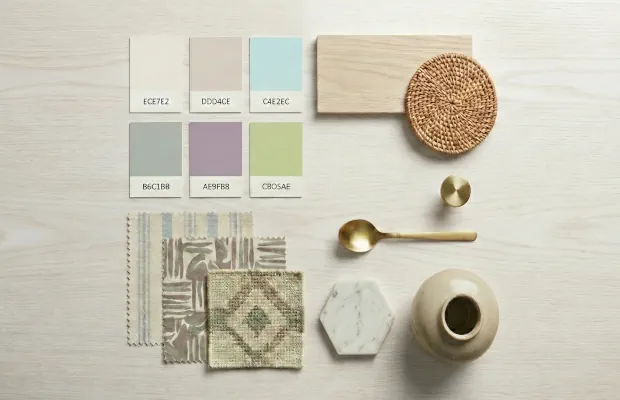
Review the concepts – You can usually expect a moodboard or a few layout options to react to, followed by one or two rounds of revisions. This is your chance to fine-tune things, so don’t be afraid to say what you do and don’t love.
Finalise and schedule – Once you’re happy, your designer will confirm orders, deliveries and installation dates. Lead times can change, so make sure you allow for some flexibility.
If in-person visits aren’t practical, plenty of designers, including My Bespoke Room, offer the whole process online. And remember to ask what happens after installation, a good designer will be happy to help with any snagging or styling tweaks once everything’s in place.
Buying and sourcing: practical tips

Getting the buying process right is just as important as getting the design right in the first place. So when it comes to choosing furniture and accessories for your living room, bear these key points in mind.
Start with the big pieces first – Your sofa, rug and lighting form the basis of your room scheme, so your designer will nail these before moving on to accessories. Layering in cushions, throws and styling touches is much easier once the foundations are in place.
Check delivery times and return policies before you commit – Larger items often come with longer lead times and stricter returns. It’s worth clarifying all of these details in advance, particularly if you’d like your room ready before a specific deadline.
Mix your price points – Splurge on items that get daily wear and tear to make sure they’re durable, and save on accent items. It’s important to invest in a sofa that stands the test of time, but not so crucial to splash out on expensive side tables or vases.
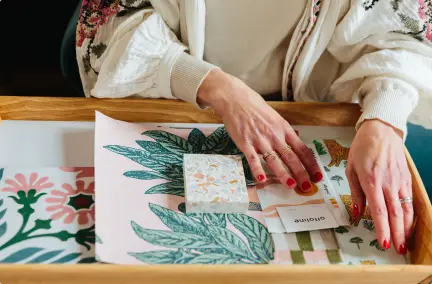
Always sample before you commit – Ask your designer for fabric swatches or paint samples to view in your own room’s light. Colours and textures can look completely different at home than they do on a screen or in a showroom, so this small step can prevent mistakes down the line.
Case examples to spark ideas
Need some inspiration? Here are a few common layout scenarios to help you envision a plan for your own home.

Small flat
In a compact space, every centimetre counts, so clever design is key. Opt for a slim-profile sofa that takes up less room, or a set of nesting tables that tuck away when you don’t need them. And choose wall-mounted shelving rather than bulky freestanding units to free up valuable floor space.

Open-plan living
The trick here is to divide the space without closing it off. A sofa or armchair with a low back, or a narrow console table, can create a subtle boundary between your living and dining areas without obstructing sightlines.

Period property
Original features like cornicing, fireplaces and sash windows are worth highlighting. Create an interesting balance between old and new by complementing the architectural period elements with contemporary furniture and accessories.
Frequently asked questions
What is a living room designer?
A living room designer is a professional who helps you plan and style your main living space so it works as well as it looks. Rather than simply decorating, they bring together layout, furniture, lighting and finishes around how you use the room day to day.
Who is a living room designer for?
If you want to make your living room work better and look beautiful, then a designer is for you. Whether you’re a first-time homeowner or busy family, or even renovating or staging a property, a living room designer can bring huge value to your space. Many homeowners assume that professional interior design is out of their price range, but there are services that suit every budget. You can also find both online and in-person design support, so there really is something to suit everyone.
How does a living room designer work in practice?
The process usually starts with the designer taking a brief and some measurements, and from there they’ll put together concept boards and layouts. Once you’ve reviewed and refined the options, the professional will help you source items for your space and, they may also coordinate the delivery and installation. Of course, the process can vary and will depend on your choice of designer and the service package they offer.
What should people check before trying a living room designer?
Make sure you clarify what’s included in the service. Find out whether your designer will send you plans, moodboards and shopping lists, and check if installation is included and whether there are any additional fees. Also, don’t forget to ask for examples of past work and client references as this will help you to understand their style and process.
How can living room design fit into a regular wellness routine?
A well-designed living room doesn’t just look good, it also helps you rest and connect with the people around you. A designer can bring in calming colour schemes, comfortable seating, a cosy reading nook, and lighting that adapts from bright and functional in the day to soft and relaxed in the evening.
How can My Bespoke Room help with living room design?
We can help by being really clear on your brief, then putting together moodboards and practical layouts that are perfectly tailored to your space. From there, we’ll advise on furniture, lighting and finishes that suit your style and budget. If you’d like us to, we can also coordinate the sourcing and liaise with trades, so the whole process feels easy and stress-free. You can find out about our pricing, as well as typical interior design costs in our handy guide.
