
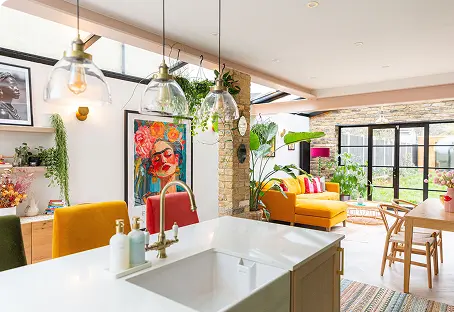
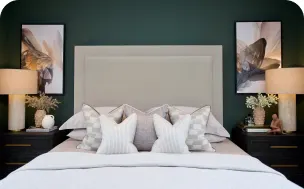
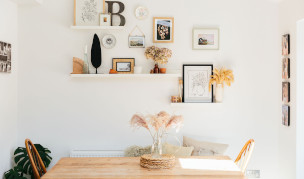
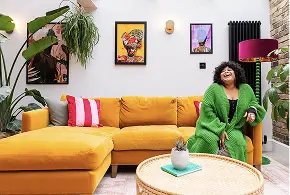












Having a small bedroom doesn’t mean you have to settle for bad design. If you want it to feel larger, the trick is to focus on eliminating visual clutter. Avoid harsh visual stops, like clashing furniture colours or floor transitions, and trick the brain into looking upward and outward.
By using clever layout moves, consistent colour palettes, and smart lighting, you can stretch your space without sacrificing comfort or character. Here are our 10 best ways to open up a small bedroom and make it feel significantly larger, tried and tested by our design team.

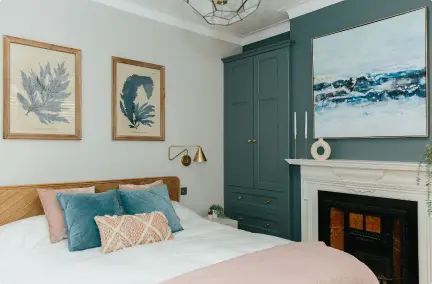
1. Paint Storage Furniture the Same Colour as Your Walls
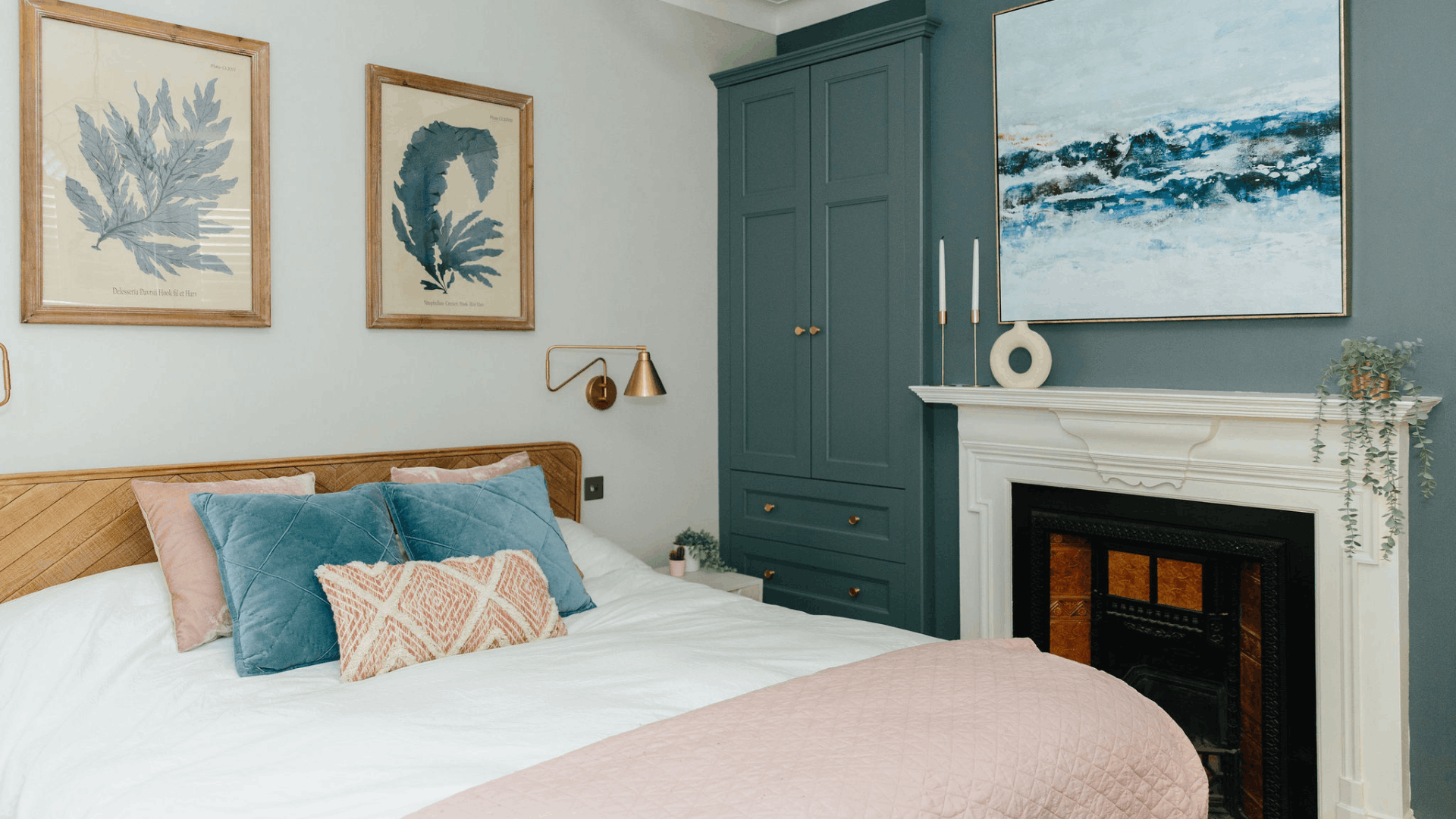
When bulky pieces like wardrobes or dressers contrast sharply with the wall behind them, they stick out like sore thumbs, breaking up the room and making it feel chopped into tiny sections. This is particularly important for children’s bedrooms, which tend to require more storage.
For a quick fix, try painting or staining your storage pieces in the same shade and finish as the walls. This lets large, heavy furniture blend seamlessly into the background, instantly expanding the visual floor area.

2. Ditch Heavy Frames for Low-Profile Beds
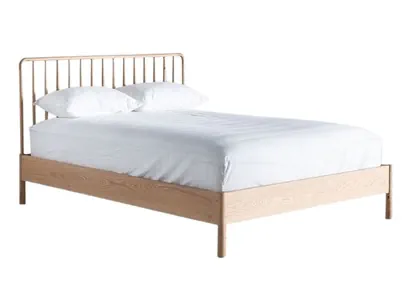
The higher your bed sits, the more it dominates the room’s overall volume. High-density platform beds or low-slung, Japanese-style timber frames keep the primary mass close to the floor.
Lowering your mattress height maximises the vertical distance between the bed and the ceiling, giving the impression of a much loftier, airier room.
3. Bounce Light Upward onto the Ceiling
Standard ceiling light fixtures direct light straight down, leaving the upper corners of the room in shadow and making the ceiling feel lower than it actually is.
Instead, use slim wall-mounted uplighters or tall, slender floor lamps pointed at the ceiling. Splashing light across the top of the room lifts the ceiling visually and expands the room’s perceived height.

4. Run Continuous Monochromatic Flooring
Every time your floor changes materials, like switching from wood in the bedroom to tile or carpet in an adjacent bathroom, it draws a sharp line that divides the space.
Extend one continuous flooring material (like wide-plank light oak or smooth micro-cement) straight through the bedroom into adjoining spaces. An unbroken floor line tricks the eye into seeing one vast surface.
5. Use Glass, Acrylic, or Open-Weave Furniture
Materials you can see straight through provide functional surfaces without adding any visual weight to a small room.
A nightstand made of smoked glass, a clear acrylic desk chair, or a cane-backed headboard lets light pass right through to the walls behind them, preserving an open sightline.

6. Go Big with One Standout Piece
It seems natural to fill a small room with tiny furniture, small lamps, and miniature art prints, but this can actually make the space look busy and chaotic.
Instead, place one large-scale design piece—like an oversized table lamp or a big, dramatic piece of art—in the room. The brain naturally uses that large item to gauge the dimensions of the space, making the whole room feel bigger by comparison.
7. Hang Full-Width Drapery Across the Headboard Wall
Instead of a standard wooden or upholstered headboard, consider running a continuous, floor-to-ceiling curtain drape along the entire wall behind your bed.
This hides awkward room corners, masks off-centre window placements, and creates a luxurious, hotel-like backdrop that blurs where the wall actually ends.

8. Swap Hinged Doors for Pocket Doors
Standard swinging doors demand a large clear path to open properly, eating up valuable floor space where a nightstand, lamp, or chair could otherwise fit.
To reclaim space and ease traffic, replace a hinged door with an architectural pocket door that slides directly into the wall cavity.
9. Hang Art Off-Center
Hanging a single piece of artwork dead-centre over the bed reinforces the strict boundaries of the room.
You could guide the eye away from them instead. Try hanging art off-centre – low over a bedside table or tucked into an unexpected corner. This deliberate asymmetry forces the eye to scan across the room’s entire perimeter rather than locking onto one central spot.

10. Frame the Windows with Hidden Lighting
Relying solely on overhead lighting limits how dynamic a room feels at night.
Install hidden LED strip lighting recessed into the ceiling directly above your window curtain tracks. Casting a gentle “curtain of light” down vertical drapery highlights the room’s outer edges, blurring physical wall boundaries and giving the space a cosy, expansive sense of depth.
FAQ:
Light and consistent colour palettes can help a small bedroom feel more open by reducing strong visual breaks. Painting large storage furniture in a similar shade to the walls can also help bulky pieces blend into the room rather than dominate it.
Low-profile beds can make a small bedroom feel taller by increasing the visible space between the bed and ceiling. A simple frame with a lighter visual footprint can also prevent the bed from overwhelming the room.
Yes. Mirrors can reflect both light and views across the room, creating a greater sense of depth. Positioning one near or opposite a source of natural light can be especially effective in a compact bedroom.
Not necessarily. Filling the room with lots of miniature pieces can make it feel busy and cluttered. A smaller number of well-proportioned items, including one or two larger focal pieces, can create a calmer and more spacious-looking scheme.
