











Contemporary Dining Room Design with Navy and Oak Accents
Be inspired by this real client design,
created by out expert designers.
Shop the look, save your favourites, or
Ready to create your own dream room?
Book a FREE Designer Call
Designers Edit
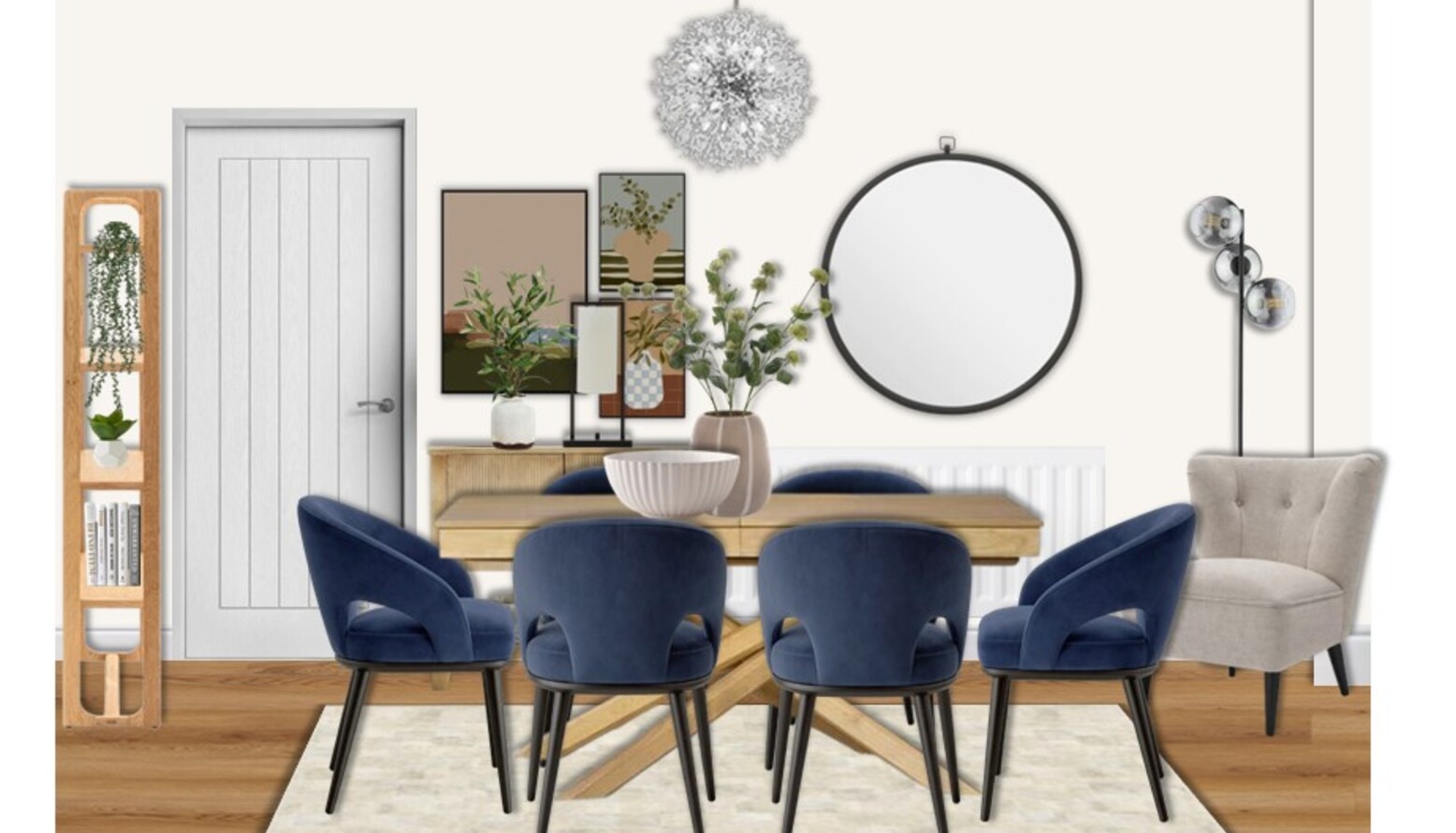
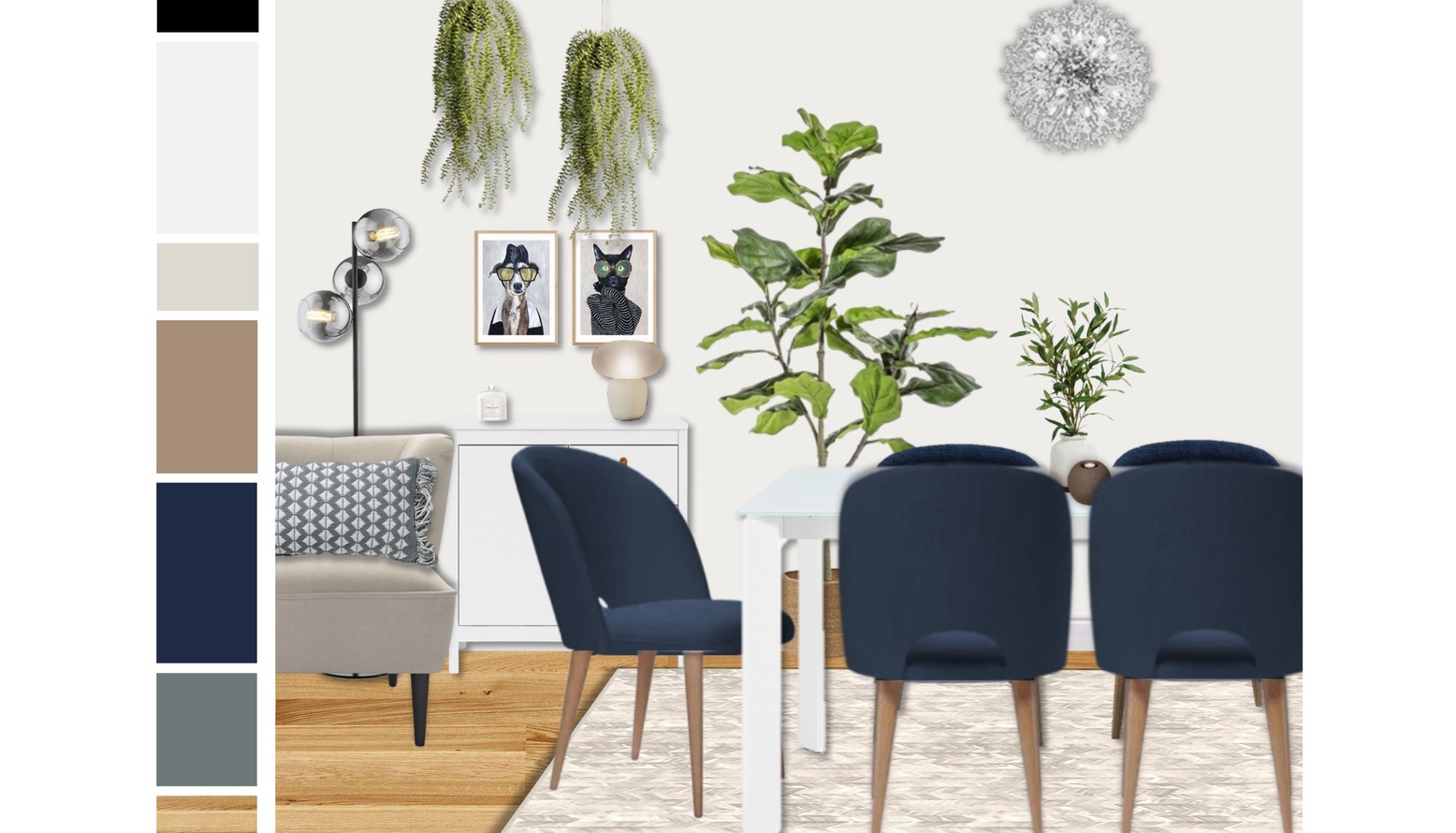
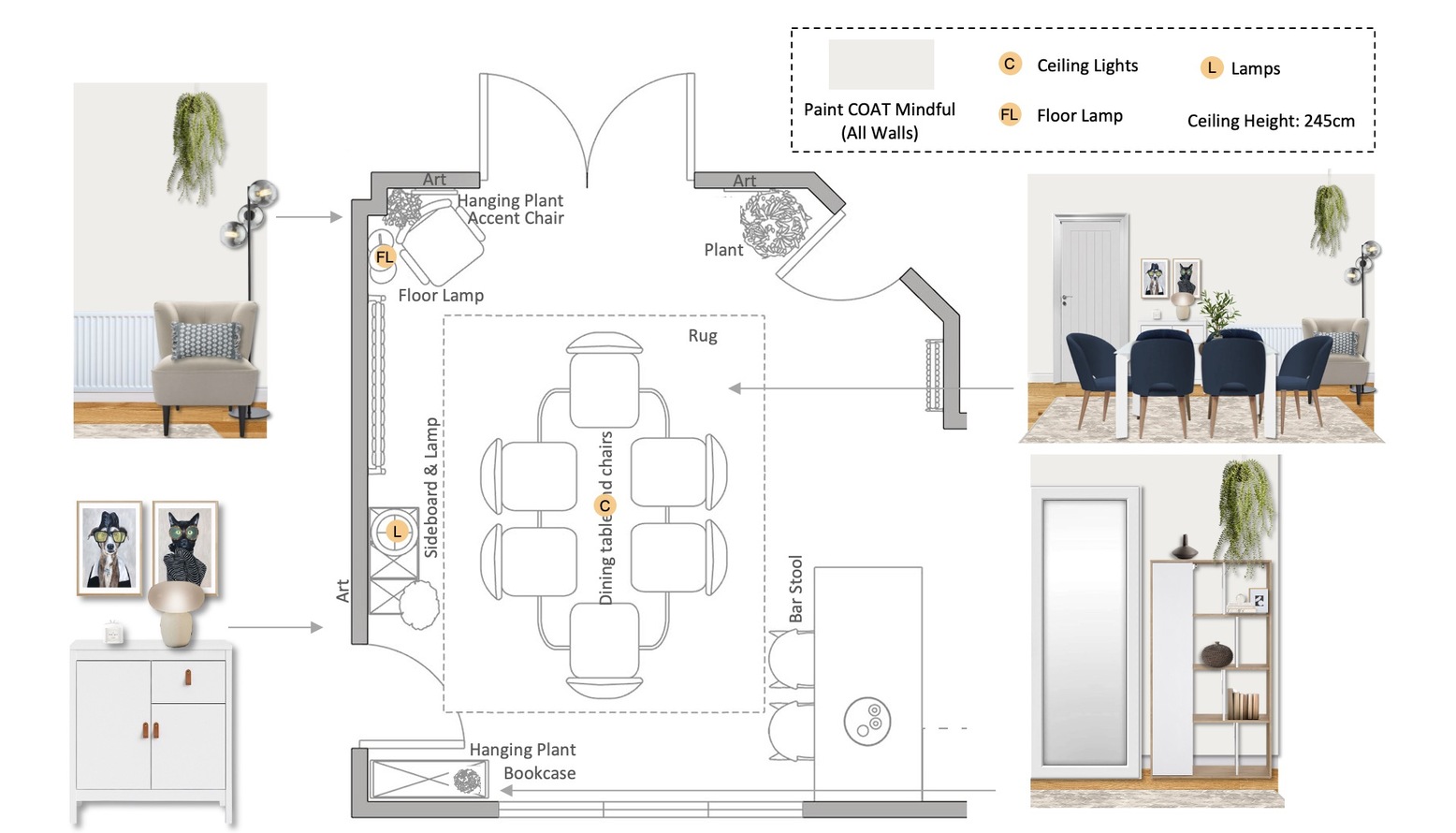
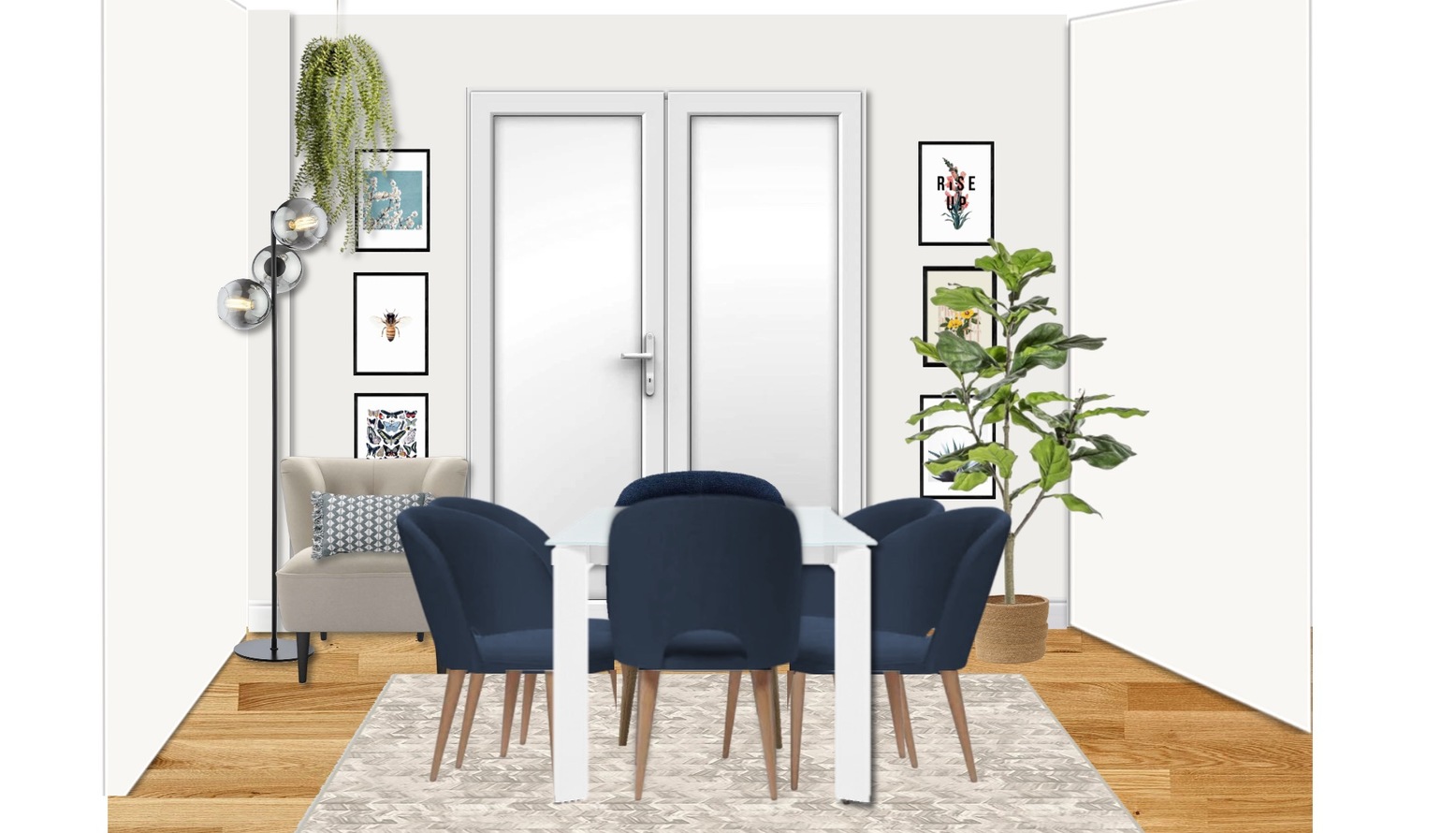
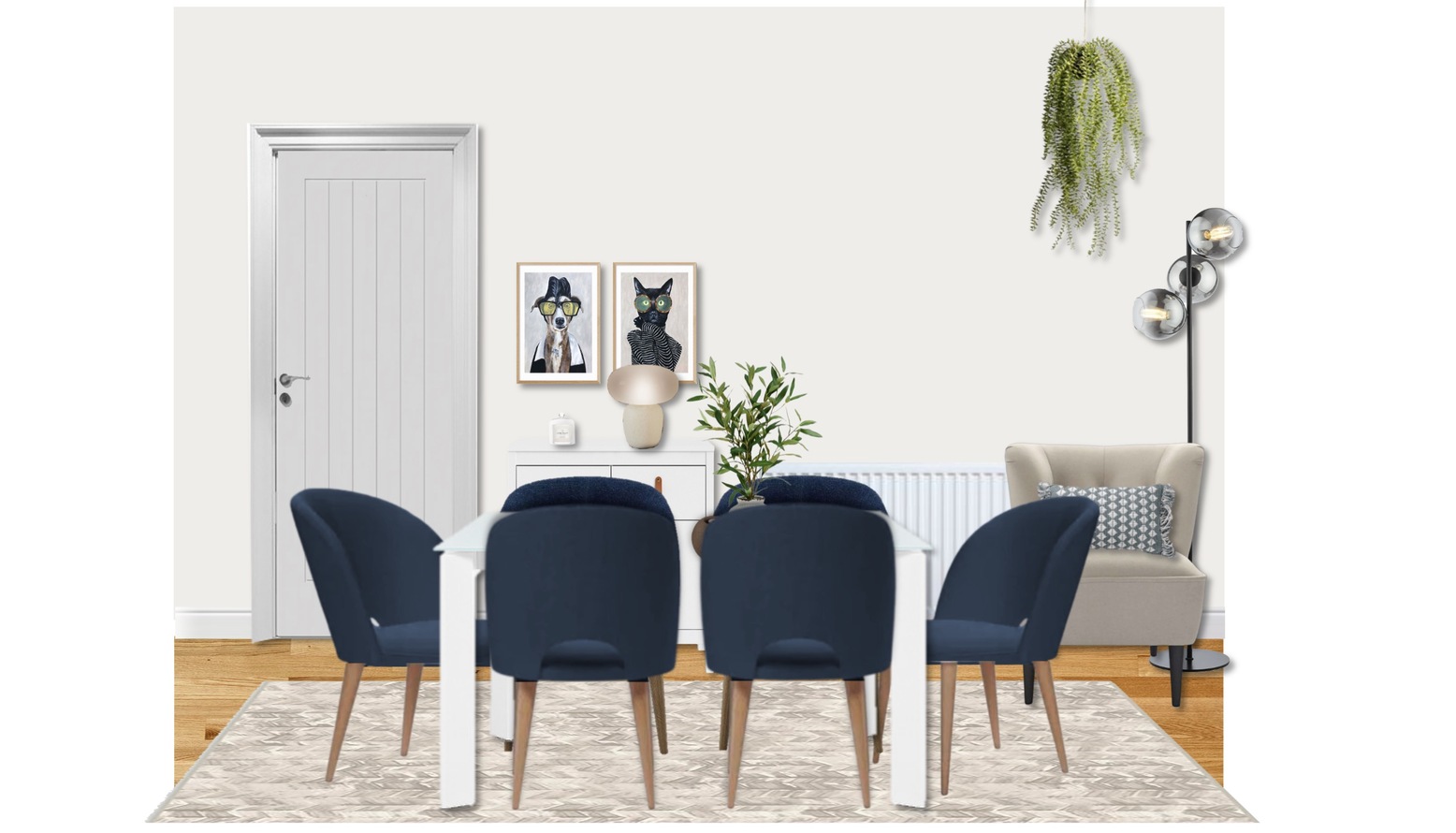
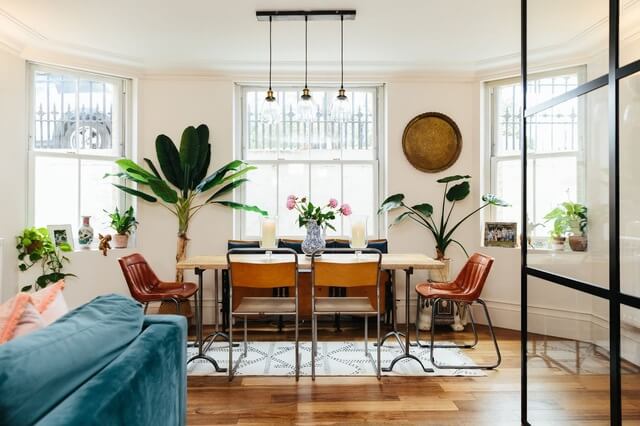
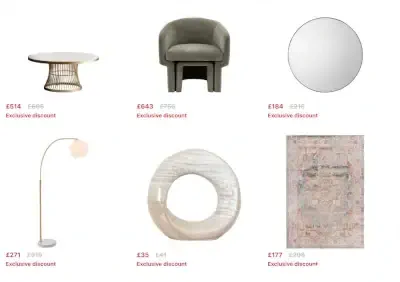
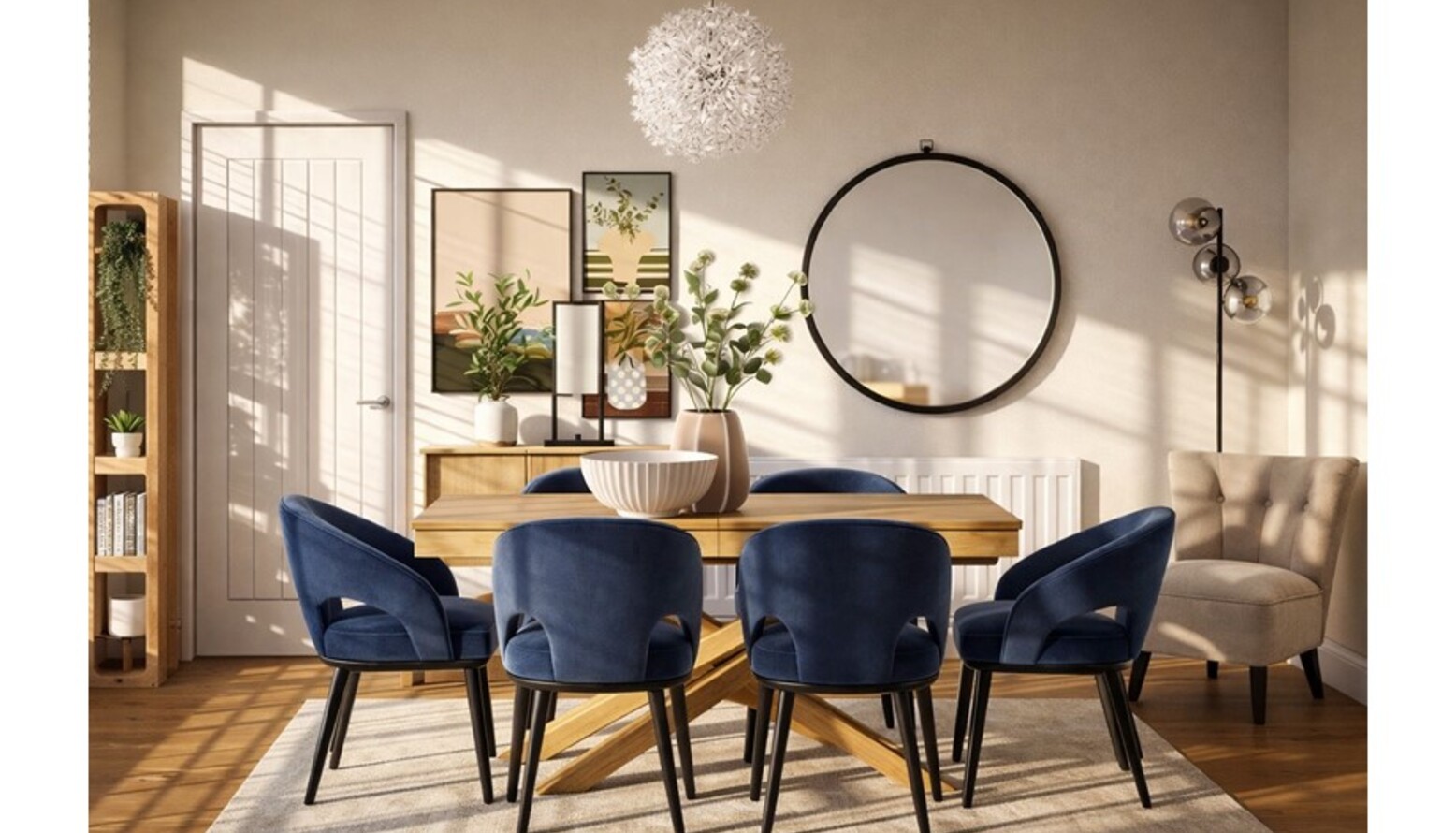
This dining room exudes a contemporary style with a harmonious blend of textures and colors. The centerpiece is an extendable whitewash wood dining table, complemented by six navy velvet dining chairs featuring gently scooped arms and supportive backrests, each resting on sleek black hardwood ash legs. A natural oak sideboard provides ample storage, while an open display shelf showcases decorative items and greenery.
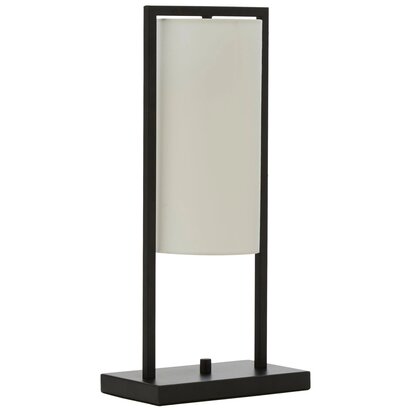
Lighting plays a crucial role in the atmosphere, with a striking three-light floor lamp that combines black and ombre glass, and a round wall mirror that enhances the sense of space. A stone flatwoven rug in neutral tones anchors the room, adding warmth underfoot.
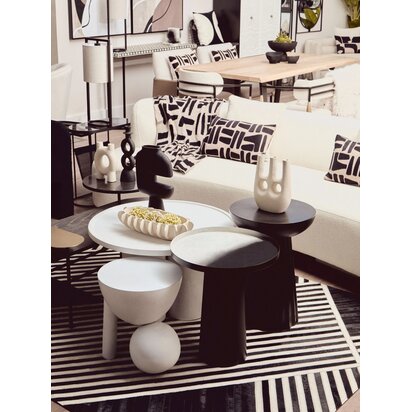
Decorative accents, such as abstract artwork and chic vases, bring personalized touches to the design. A stylish cushion adds comfort to an elegant armchair in a sea salt aquaclean linen look. Plants, both real and faux, incorporated throughout infuse life into the space, while woven placemats grace the dining table, preparing it for gatherings.
Overall, this design balances functionality with sophisticated style, creating an inviting ambiance for family meals and entertaining guests.
Dining Rooms Design Guides
Read our top tips for designing your dining room.
Your Dining Room Design Questions Answered
The most important tip for designing a dining room is to think about scale. It’s all very well to have dreams of entertaining a whole banquet of guests around your dining table but if the space available won’t accommodate it, an oversized table will look very out of place.
The same can be said for matching the scale of your chairs to your dining table. In order for you and your guests to be comfortable, it’s important that their chairs aren’t too high so you have to slouch or too low that you can’t reach your plate!
If you have just one take away (pardon the pun) from this guide then let it be bench seating.
For smaller dining rooms a simple bench can be a blessing. Ensure that the width is smaller than your table so that it can be tucked right under and then against the wall when you don’t have enough guests to warrant the whole table.
But not only do they literally take up less space - they give the appearance of it too as their slim profile won’t distract the eye.
Other similar tactics you can employ in small dining rooms is to use ‘ghost chairs’ (chairs that are a transparent plastic and a modernist icon) and avoid bulky high backed ones. Thin chair and table legs also give the same trick of the eye.
Open plan spaces are a must have for so many of us but they are notoriously tricky to get right during the design process.
It’s often the case that dining tables within open plan spaces become a dumping ground for paperwork, shopping other miscellaneous objects that don’t have a home. These types of things will always end up somewhere as none of us are saints and normal life gets in the way of our minimalist clutter free dream! But to keep your dining table clear - find another spot in the room (ideally close to the door) that acts as a ‘drop zone’. This could be in the form of a shelf or a built in or freestanding cupboard so it can all be tucked away out of sight when you’re not quite ready to deal with it!
If your dining table is in an open plan space you’ll also want to zone it appropriately so that it doesn’t just look like a floating table in a large room! Rugs work wonderfully for this. Choose one that’s larger than your table and chairs when pulled out (to prevent scuffing you floor). This will group everything together and make it clear to the eye what this space is for. It's also a great way to add colour and texture to a space without picking up a paintbrush and you can swap it later if you want to change the style of the room.
Setting the right mood is crucial in a dedicated dining room. Think about the kind of entertaining you do and how you want your guests to feel. Do you like the idea of an intimate, cosy dinner party or are you feeling more decadent 30’s cocktail party?!
For colour inspiration there’s no better place to look to for inspiration than your favourite bar or restaurant. Deep moody colours are often utilised in these spaces to create a decadent vibe. Warmer tones also have the additional benefit of making you feel cosier in the space.
If you’re blessed with high ceilings in your dining room consider whether you can paint your ceiling a darker shade. This might seem like a bold move but psychologically, a dark ceiling will ground you and your guests into the space making them feel more comfortable and focussed on the food and company in front of them.
Nothing sets the mood in a dining room quite like lighting so it’s important to get that right and plan early.
Not surprisingly, your lighting should be focussed all around your dining table. A pendant over your table is the ideal accompaniment to a dining room design. This will keep focus on the task at hand! You should also layer in lower levels of lighting around the room in the form of a table lamp on a sideboard or a floor lamp in the corner.
You need to strike the perfect balance between enough light so that everyone can see what they’re eating but a subtle glow to create a relaxing vibe.
Dimmers will be your best friend! If you can, make your dining room table light dimmable so you can adjust it.
Opt for a softer yellow bulb temperature rather than white as it’s much more relaxing and not to mention more flattering for you and your guests!
Dining rooms are a fantastic opportunity to impress guests and display your treasured trinkets and momentos.
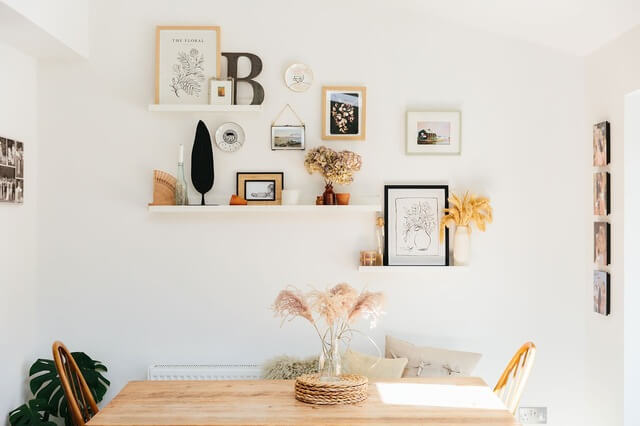
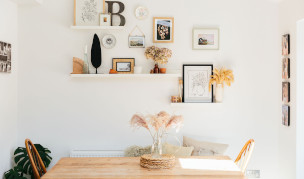
Display cabinets work well but if you don’t have much floor space to play with look to your dining room walls instead. Put up shelves to showcase your collections or create a gallery wall out of photos, art, postcards and even hang collectibles like a collection of plates or ornate fans picked up from travels.
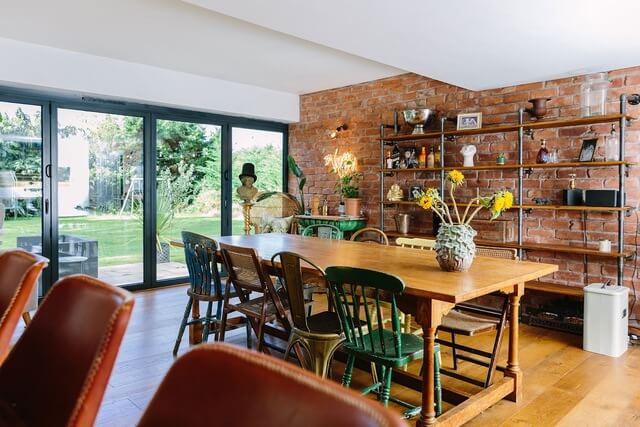
Absolutely not! Part of great design is all about creating contrast and that can and should be with your dining room furniture as well. A vintage, antique dining table that’s stood the test of time will look amazing next to modern dining chairs which will emphasise its age and beauty.
You can also mix and match your dining chairs. This can be a combination of chairs and benches to save on space or mixing up the end chairs or even every chair could be completely unique! Just make sure they all complement each other and that your dining table and chairs have a common ‘thread’ tying them together such as colour, material or style.