











A blue & brass living & dining room with a geometric patterns and a pop of yellow
Check out this room design for our client complete with 3D visuals and floorplan.
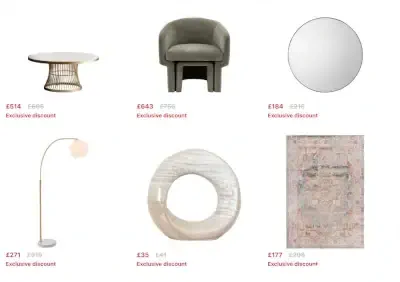
Shop the designer’s edit to get this look in your home!
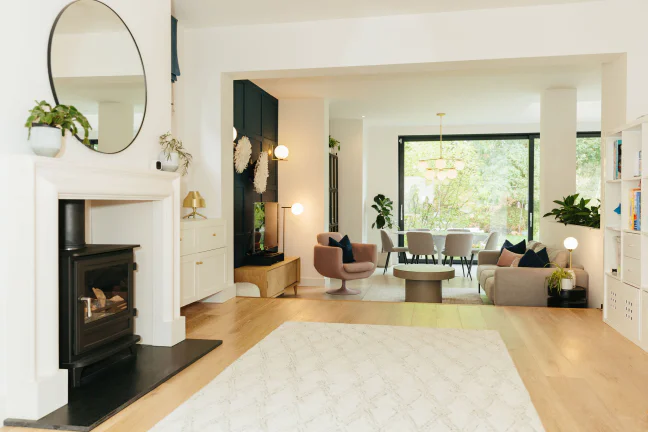
This living room features a captivating blue and brass color scheme, enhanced by geometric patterns and vibrant accents. The dark blue wallpaper with intricate lines creates a sophisticated backdrop, complemented by a serene piece of artwork above the sofa.
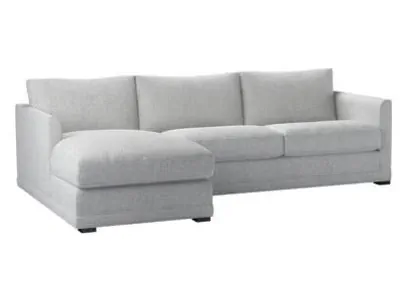
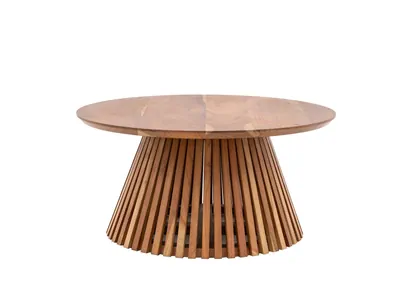
A spacious, light grey chaise longue sofa invites relaxation, its soft texture contrasting against the dark wall. A round, marble-topped coffee table offers a sleek surface for decor, while a golden pendant lamp hangs gracefully above, adding a touch of elegance.
In one corner, a bright yellow cocktail chair injects a delightful pop of color, harmonizing with the brass elements throughout the room. Decorative cushions, including a gold-embroidered one, enhance the cozy vibe, while greenery in a large brass planter breathes life into the space.
Functional yet stylish, a white sideboard serves as a TV unit, blending practicality with chic design. The arrangement allows for an airy feel despite the compact layout, ensuring that the room remains open and inviting.
Additional thoughtful touches, such as a textured rug and vases, complete the aesthetic, creating a well-balanced living area that radiates warmth and personality.
Geometric contrasting wallpaper adds character and complements the large blue, teal and green abstract statement art and yellow velvet accent chair.
Living Rooms Design Guides
Read our expert living room top tips.
Your Living Room Design Questions Answered
The next step to designing a living room is to do some serious pondering about how you want to use the room. Will your living room be used predominantly to watch TV? If so, you’ll need a layout where everyone can see the screen. Perhaps your living room will be used for greeting and entertaining guests? In that case you want plenty of space around furniture for guests to move around and some little seating areas for break out groups.
Your layout will also depend on whether you’re designing a living room within an open plan space or a living room only. In an open plan living room you’ll need to clearly zone the seating space so that it’s clearly defined within the larger space.
Rugs are a fantastic way to do this - the change in flooring makes a clear distinction that this is a seating area. It also helps to position your sofa and armchairs around a central coffee table so you’re creating a focal point and also the chairs act as a divider to the rest of the room.
For more tips on how to design an open plan living room, take a look at our dedicated guide.
It can be tempting to shove all your living room furniture against the walls but this isn’t always the best approach! Pulling them into the room can create a cosier and more sociable vibe so you won’t need to shout across the room! It will also free up walkways around the central seating zone so that others can pass through.
When perfecting your layout you also need to consider the lighting in the space. For example if you’d like to have a little separate reading nook within the room then try to position it nearer the window so you can read clearly.
Equally important is to make sure your TV isn’t completely unusable with the glare from the window!
Now that you have your living room layout you can begin to work out how you want to feel in the space. Do you want to feel warm and snug? Perhaps you want more of a luxe look to impress guests for entertaining? These questions will help you work out your living room design direction.
Eclectic styles work very well in living rooms as it’s a great place to display and admire your treasures. Read our guide on how to display your collectables here.
However if you’d like a more contemporary and minimalist living room then we’d advise investing in built in bespoke furniture. That way you can sweep all the clutter away in the cupboards and out of sight!
Not sure what style you’d like? Inspiration can come from many places. Perhaps it’s a piece of furniture you already own or have your eye on that will guide the rest of the design direction? Artwork is also wonderful inspiration - pick out colours and themes from a particular piece you’re drawn to and make it the star of the show.
Now this is a question we get asked a lot, so much so we created a whole colour consultancy for it! However I’m afraid there’s no ‘one colour fits all’.
Different colours can create different moods so go back to our original question of how you want to feel in the space.
Dark moody colours are perfect for a comfortable snug or cinema room. Greens and blues work particularly well and their connection to nature is very calming.
The sofa is likely to be the most important (and expensive) item within your living room and so it’s important to start there before choosing the other smaller items of furniture.
We’ve written a whole guide on how to choose the perfect sofa but to summarise here are the 6 steps:
Measure up
Ask yourself whether you want it to be a foundation piece or a stand out feature
Think practically - if you have mucky kids or a dog then you’ll need to factor that in!
Keep it timeless - sofas can be expensive so make sure you pick something you truly love and not be led by fleeting trends
Aesthetics - your style of sofa needs to match the style of your home. It’s no good adding a large patterned sofa into a sleek minimalist home!
Orientation and shape - think about where the sofa will be. Use boxes or tape to help you visualise the sofa in the room
Cushions are not just an accessory, they are crucial to a perfect living room design!
Give your eye plenty to bounce across by creating levels with different size cushions. Contrasting textures can also take your sofa to the next level and make it super inviting.
The great thing about cushions is that they are relatively cheap! This means you can get creative and have a bit fun without taking too much of a risk.
Check out our blog post on how to style sofa cushions.
Ambient lighting is the best for living rooms as you typically want to feel calm and relaxed when you’re in them.
To achieve this make sure you add in plenty of levels of light. For example you’ll want to have a ceiling pendant but also some lower floor lamps and then some very low table level lighting.
Also make sure you consider light temperature. For bedrooms and living rooms a warmer light works well as opposed to a crisp white light that is more appropriate for rooms that you need to carry out tasks in like your kitchen.
Have a read of our dedicated lighting guide here for tips and ideas.