











Sophisticated open plan living and dining area
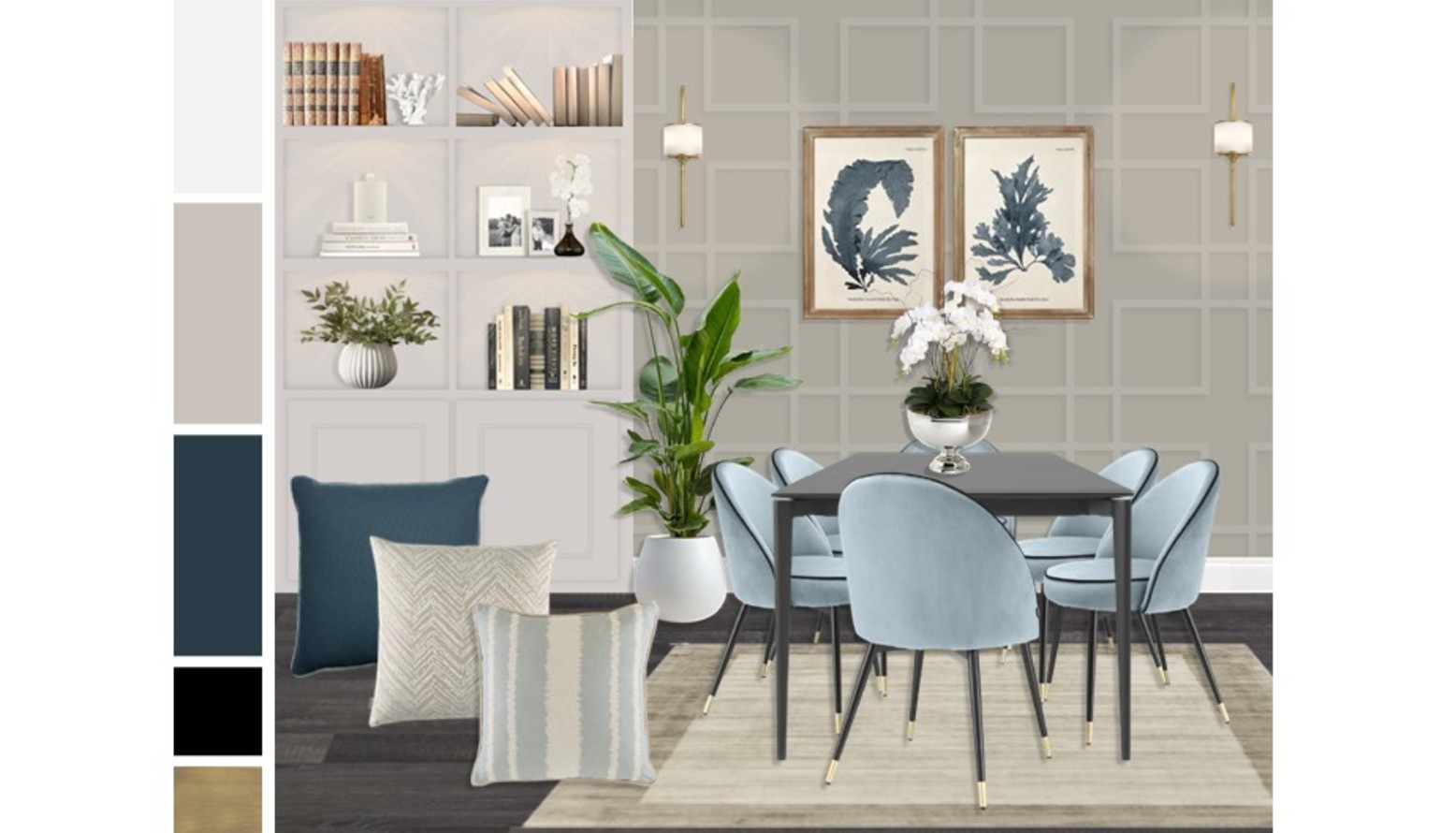
Check out this room design for our client complete with 3D visuals and floorplan.
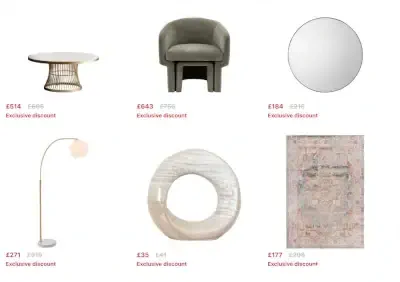
Shop the designer’s edit to get this look in your home!
Designers Edit
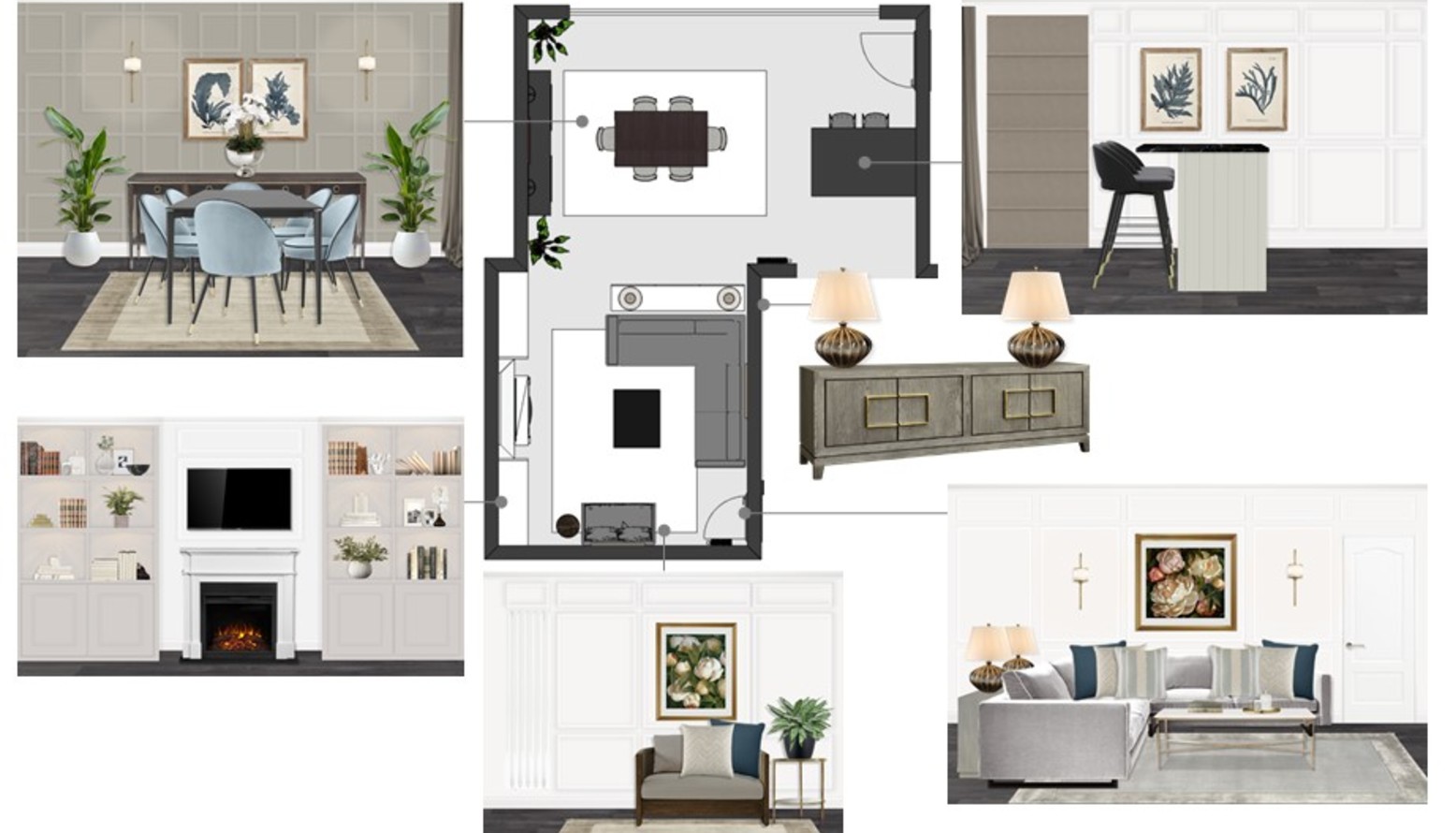
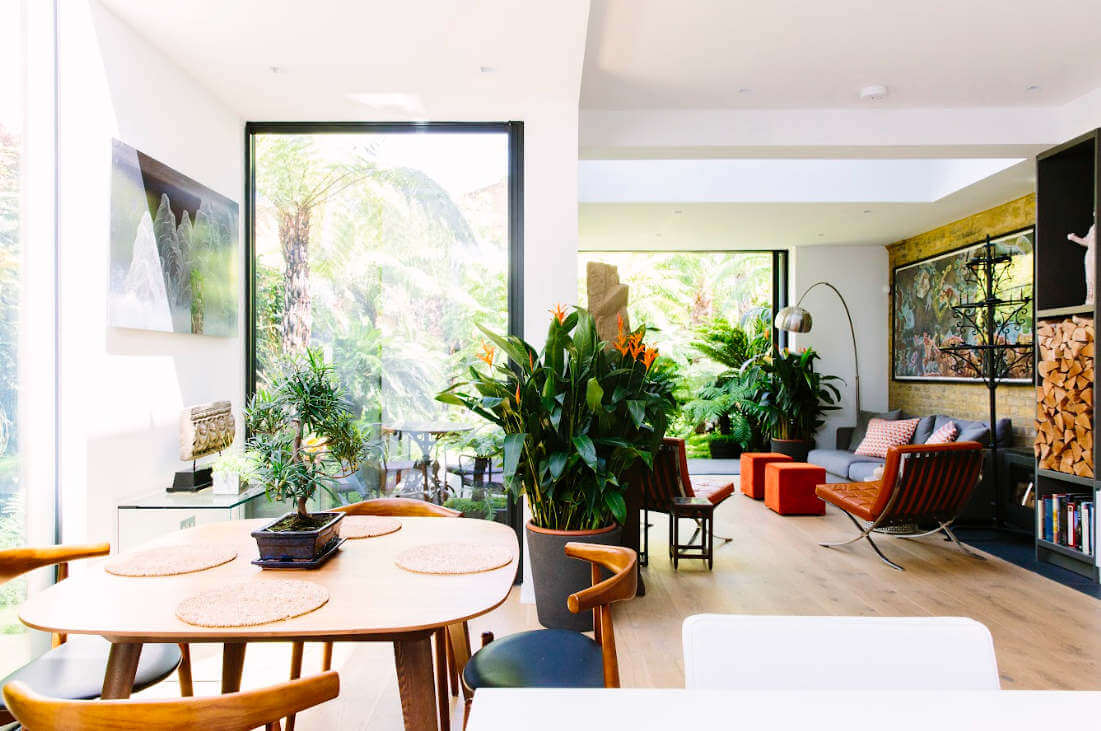
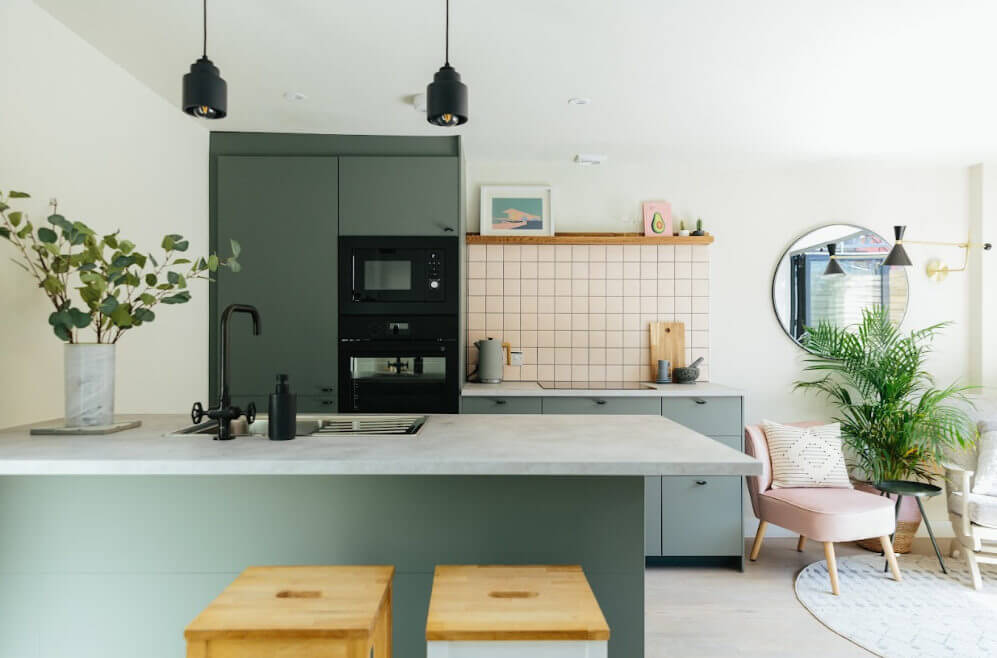
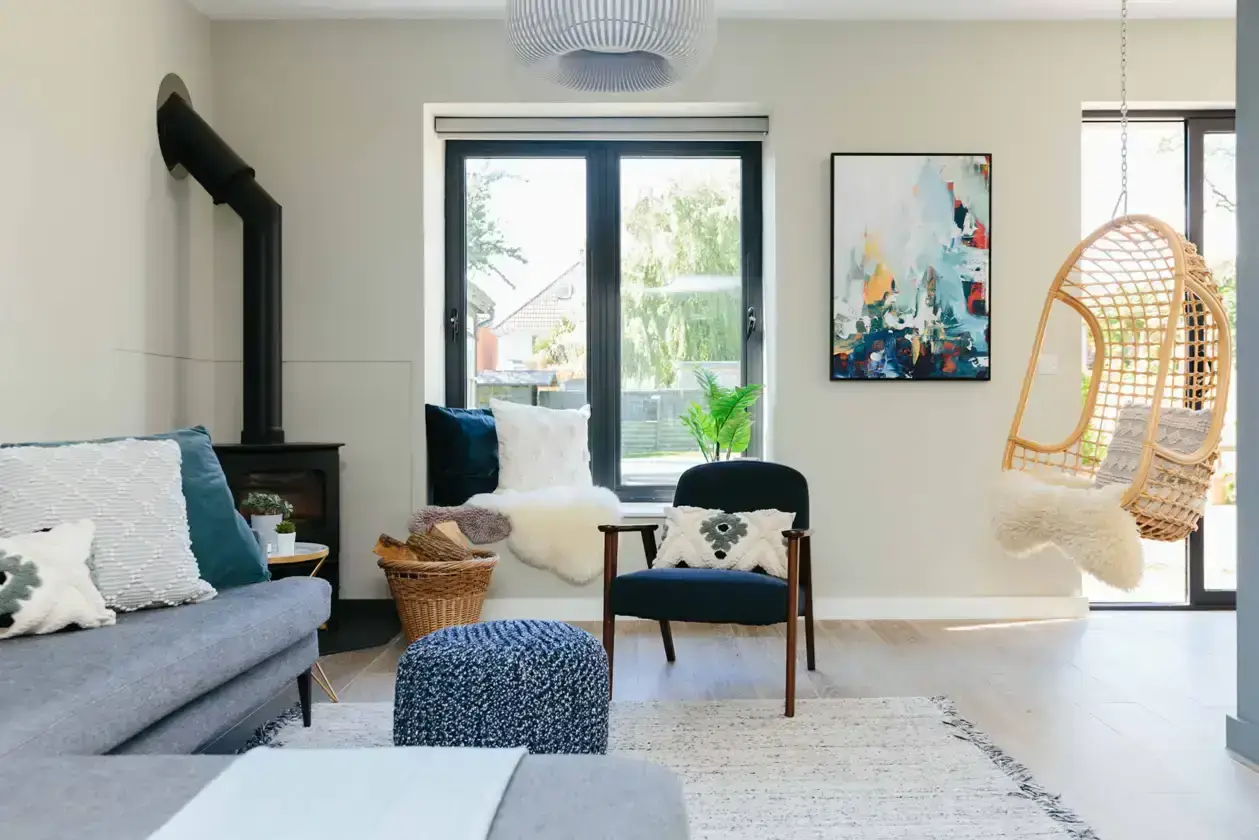
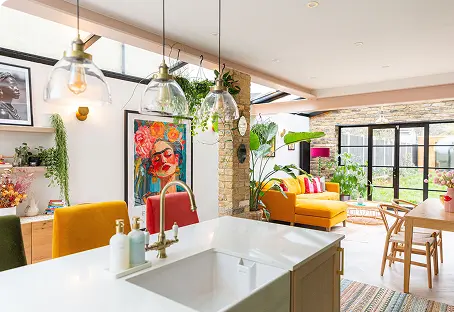
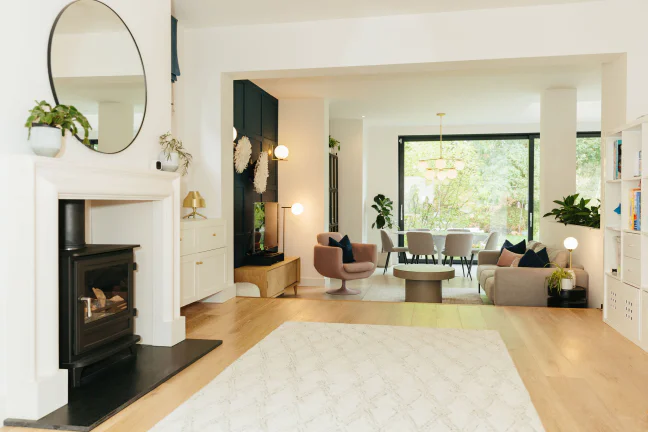
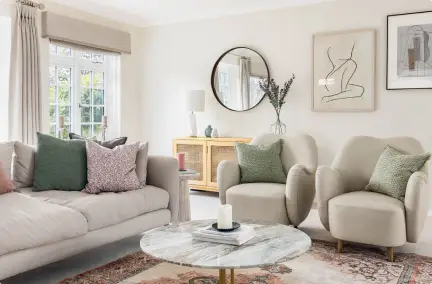
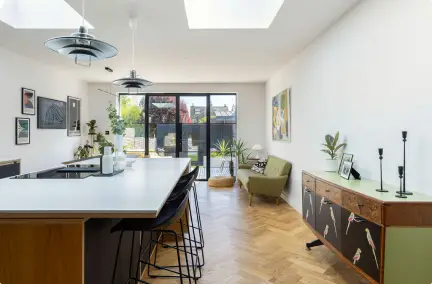
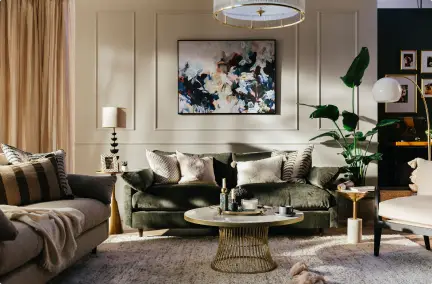
The space is a sophisticated open-plan living and dining area, featuring a stylish blend of elegant furnishings and modern decor.
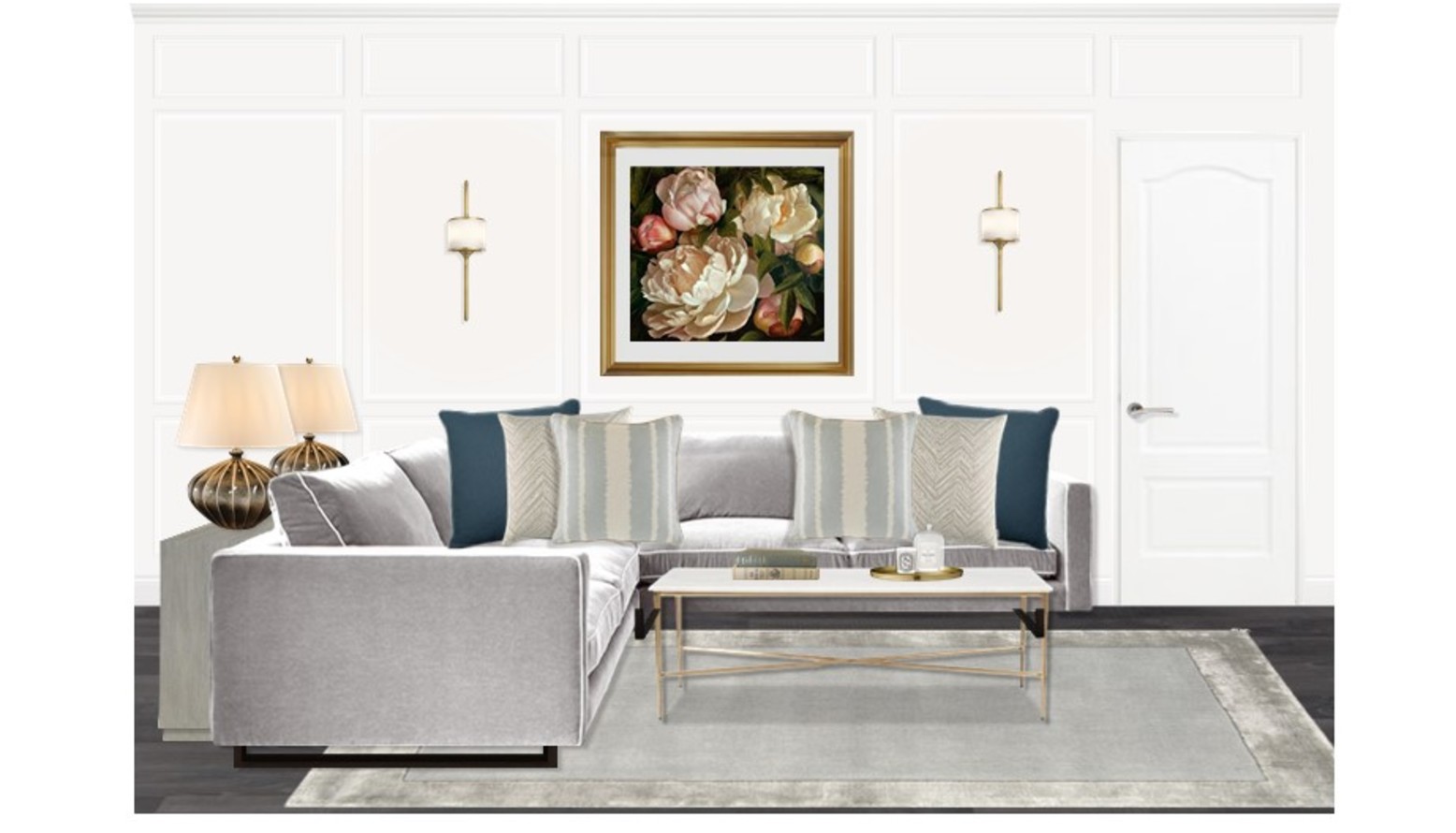
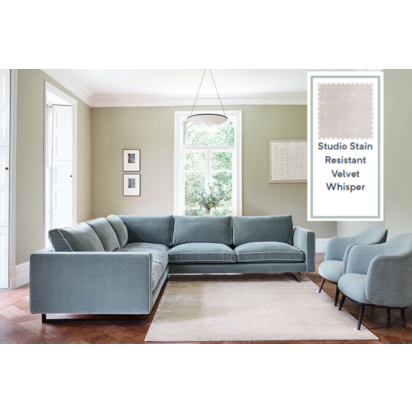
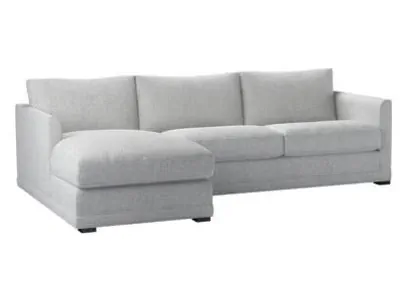
At the center, a sleek Neve rectangle coffee table made of white marble offers a refreshing contrast against the rich tones of the room. Surrounding it, a comfortable Byron symmetrical corner sofa in stain-resistant velvet whispers sophistication.
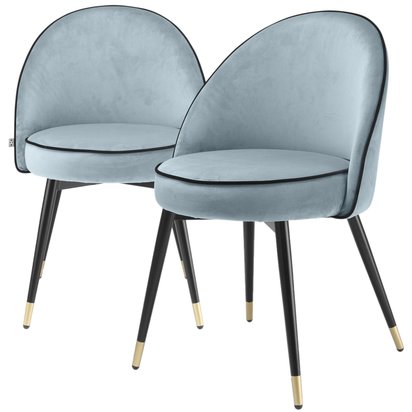
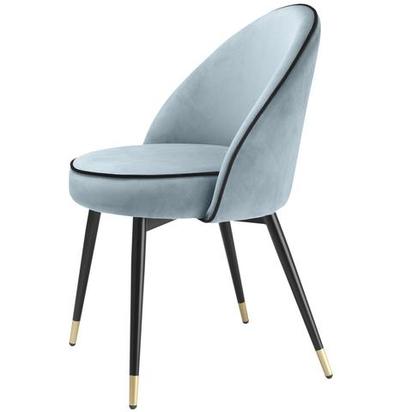
The dining area is anchored by the Desire Designs Nesslie dining table, complemented by Cooper dining chairs in a stunning savona blue velvet. The gentle curves of the chairs enhance the inviting feel of the space.
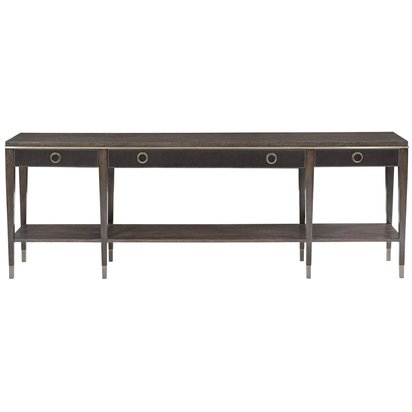
A Lucca media unit with four doors provides ample storage while maintaining a minimalist aesthetic. For additional style, a BERNHARDT Clarendon console table is positioned against the wall, flanked by soft lighting from a Mona 2 light wall light.
Textiles are thoughtfully layered throughout the room, with John Lewis linen cushions and a mixture of decorative cushions from Andrew Martin and Rice, adding warmth and texture.
A striking ceramic pot plant adds a touch of greenery, creating a refreshing focal point in the corner. The Blade Border rug in smoke putty seamlessly ties the room together, enhancing its cozy atmosphere.
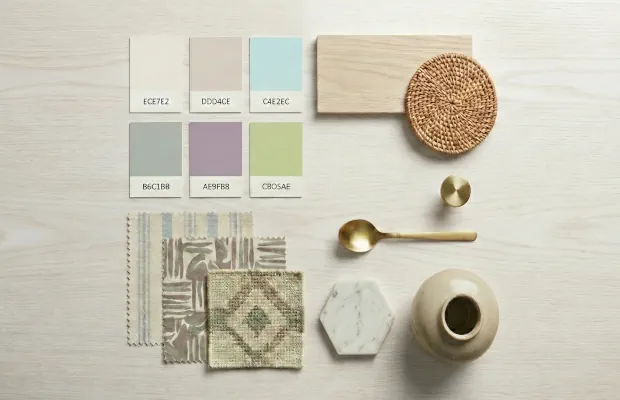
Artwork plays a crucial role in the design, with OKA's framed prints adding character and depth to the walls adorned in subtle tones from Farrow & Ball. Each wall color choice, from School House White to Light Gray and Elephant's Breath, harmonizes beautifully, emphasizing the room's serenity.
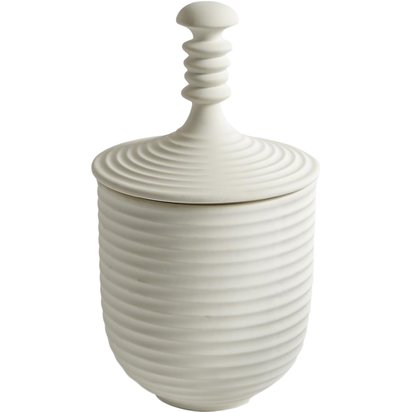
Accent pieces like white orion jars and symmetry objects provide whimsical touches, while the Rib Pumpkin table lamp adds illumination and style.
To complete the look, a Hudson side table in champagne is strategically placed for convenience, alongside a Danetti Clover velvet bar stool that introduces a chic contrast with its black wood and brass legs.
Open Plan Living Design Guides
Read our expert top tips for your open plan living space.
Your Open Plan Living Design Questions Answered
The concept of open plan design originated in the 50’s and is one of the biggest hallmarks of mid-century modern design.
But enough of that history lesson! Today it’s a term used to describe large open spaces that include more than one function - so having your kitchen and dining room all in one room rather than separated by walls which was the traditional way homes were designed.
There are a huge number of benefits to the open plan way of living. For starters it provides a space for the whole family to come together and socialise. (Not to mention it makes for a great party!)
It enables families to be in the same space but carry out separate activities too. For example dad can be cooking while mum watches a film on the sofa and their teenage kids pretend to do their homework on the dining table.
It’s also particularly sought after by younger families where the sight lines are useful for keeping an eye on mischievous toddlers!
Open plan extensions also typically open onto the garden which means you can have plenty of natural light beaming in and a feeling of space and openness. This also means that during summer you can open up the doors and your garden patio becomes an extension of the room too.
Open plan layouts are the trickiest to get right. The perfect layout for you will depend firstly on how you want to use the space. Note the word ‘you’! This is your home and you need to be realistic about what you’ll use it for. It’s no good creating the ultimate party pad if that’s not your thing!
You’ll also need to use the unique shape and size available to you as a guide for the layout. Perhaps you have an L-shaped open plan layout? This might seem like a disadvantage but in fact it makes creating distinction between the spaces much easier.
Or maybe it’s long and thin if you own a Victorian terrace or semi detached? Be realistic about what you can actually fit in there without making it too uncomfortable and crowded. A kitchen island might seem like a must-have but if it dominates the whole room you’ll quickly start to resent it. Perhaps a smaller peninsula will give you what you need at a fraction of the size?
You’ll also want to consider where the natural light falls in the room. For example it will be no good positioning your TV on a wall that gets direct sunlight but this would be an ideal spot for an armchair to create a napping area looking out over the garden.
There’s a lot to think about with an open plan design. So if you’re not feeling confident about planning the ideal layout then bring in an expert to help. We have three fixed rate packages for open plan living designs starting from just £195. Whether you just need advice on refreshing or modernising it or if it’s a brand new extension - we can help.
Find out more about our design packages here.
The key to the success of any open plan room, regardless of its size or function is ‘zoning’. It’s important to make each function in the room look distinct and purposeful.
How you arrange your furniture will be really key to this. If you’re including a living room section you can prevent it looking like a random floating sofa by turning adding two armchairs opposite facing inwards. Not only is this a more sociable layout but it will also create a clear boundary between it and the rest of the room. Rugs work wonders for this too. Source a rug that’s wider than your sofa and chairs to create a clear boundary whilst also adding warmth and colour to your open plan room.
Consider repositioning your bookshelf so that it comes out into the room acting as a modular wall between zones. It can become a stand out feature through clever styling and it also doesn’t block light which is a big win!
A great space saving tip is to use built in bench seating for your dining table. That way you can tuck your dining table right up against it when it’s not needed for dinner parties. You also have the added bonus of storage underneath! Perfect for things like spare plates and tea towels or that juicer you bought but only used once...You know the one.
I’m afraid there’s no ‘one colour fits all’. That’s why we created a whole colour consultancy for it!
Open-plan layouts are loved for their freshness and airiness. So when it comes to decorating, you’ll want to safeguard that. You might now be tempted to paint the whole thing white and move on but don’t forget that you still want it to feel warm and welcoming. A considered combination of soft neutrals and gentle colours is the way to go to get that perfect balance.
Choose soft neutrals that have undertones in your favourite colours whether that’s lilac, blue, yellow etc. You can then draw out that colour throughout the room with your cushions, rugs and curtains.
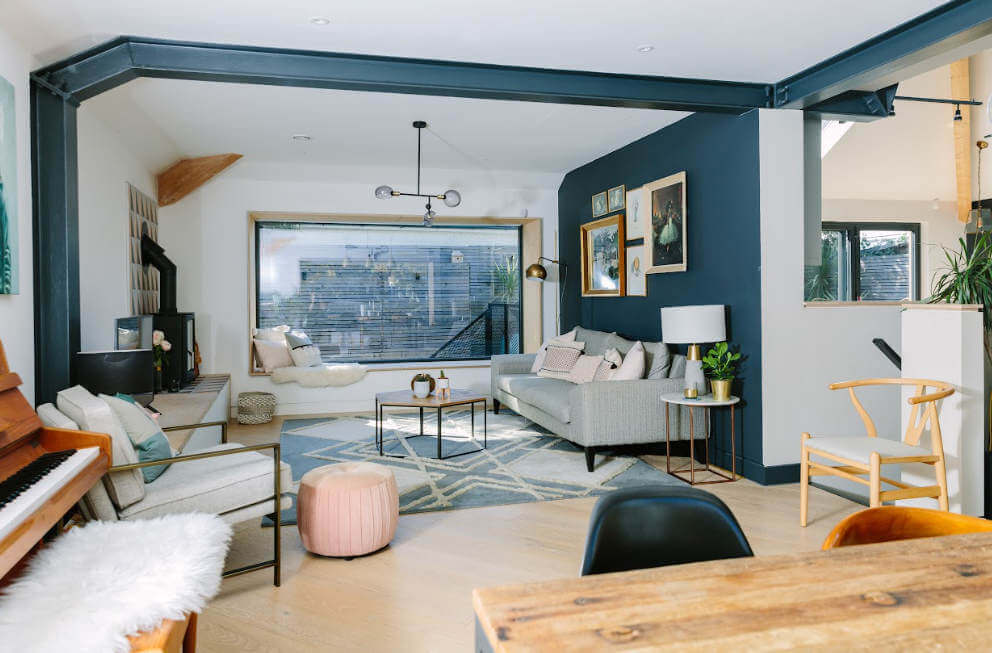
Remember there’s no need to paint the whole room in the same colour. In fact, paint is another great way to create distinctions between the zones. For example you can choose a dark blue on a feature wall behind your sofa to make it clear this is a space for settling down and relaxing.
Check out our dedicated guide for painting an open plan space.
Lighting is crucial to the success of any room - particularly an open plan one.
In large open spaces you’ll need both task and ambient lighting as it's used for so many different functions. In your kitchen you’ll need to have enough task lighting (pendant and spots) so that you can see clearly while you cook. You’ll then want a more ambient feel in your living and dining zones which can be achieved through lower levels of lighting like table, floor lamps and even candles.
Having your lighting in different zones on separate circuits will also be a blessing! It will mean you can turn off your kitchen lights while you’re trying to watch a film on the other side of the room.
Just 10 seconds flicking through any interior design magazine will tell you that open plan living is still very much sought after! We also continue to get a constant stream of open plan room design requests that doesn’t seem to be slowing down!
It’s thought that the Covid -19 pandemic which led to long stints locked in our homes had us craving more privacy within our homes which isn’t a characteristic of open plan spaces.
Since, there’s been a noticeable shift towards ‘broken plan’ which has all the benefits of open plan but with greater separation between the zones. This provides the best of both worlds!
Broken plan living is simply a large space that’s been broken without structural walls. This means that there’s a much clearer separation between the different ‘zones’ but you still have many of the advantages that open plan has to offer.
There are a number of different ways to do this but the most common are things like fireplaces installed in the centre of a room, pocket doors that can be fully opened up when needed, screens or even furniture like tall bookshelves.
There are other more subtly and purely visual tricks to breaking up a space like varying the type of flooring or using different paint colours in different sections. Lighting is also a powerful tool in your arsenal - a low pendant with a warm glow will clearly mark out a dining zone whereas lower level table and floor lamps in your living space will make you feel more grounded and at ease.